How Refugees in Kenya are Transforming Trash into Opportunities
The Kakuma refugee complex in Kenya is garnering attention for turning its trash into livelihood opportunities through a Peace Winds initiative to create a recycling ecosystem.
Kakuma–which means “nowhere” in Swahili–lies in an isolated, desert-like area nearly 500 miles northwest of Nairobi. It is currently home to more than 300,000 people who have been forced to flee their homes in neighboring countries–primarily South Sudan, the DR Congo and Somalia.
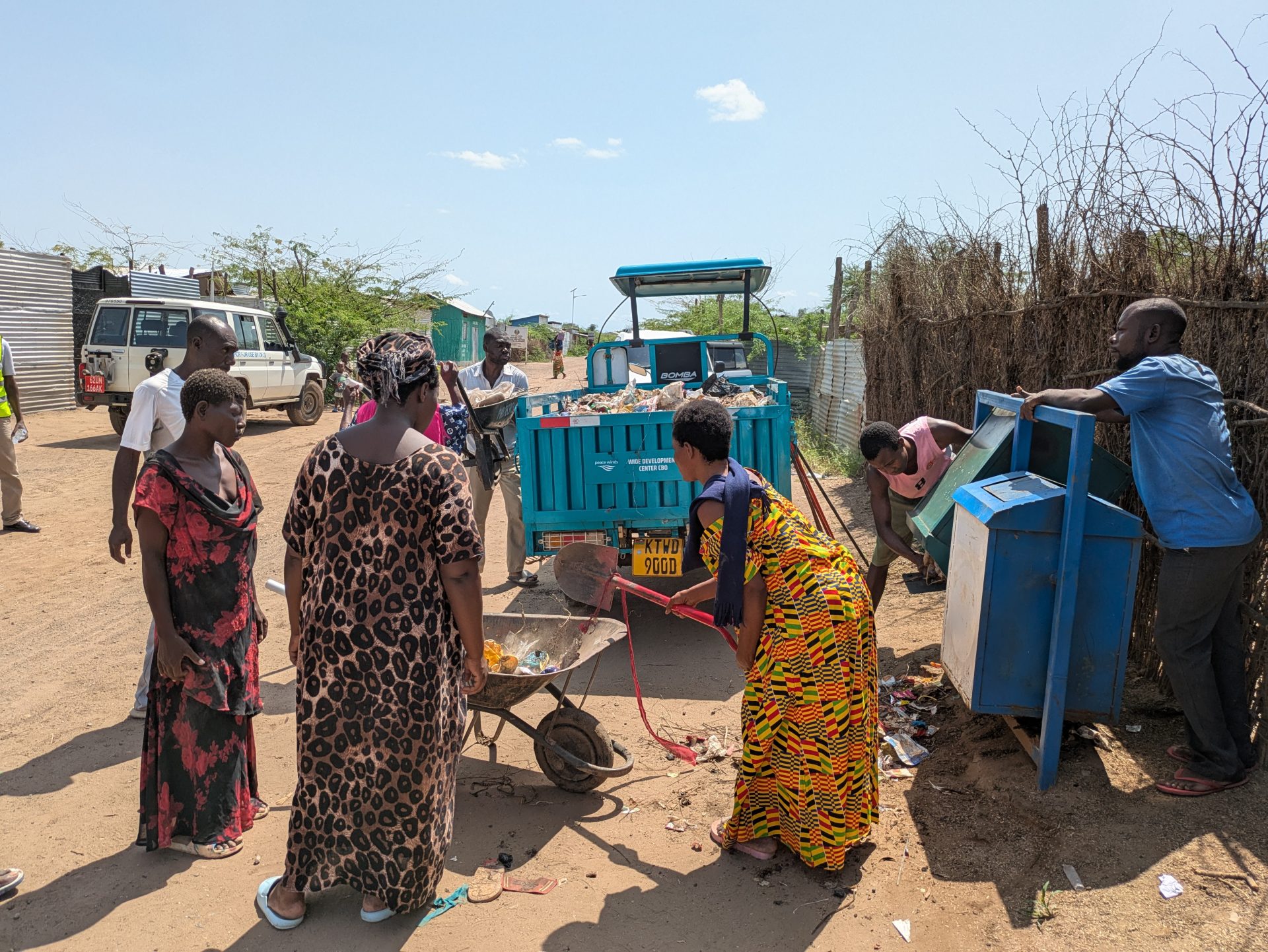
A few years ago, the community had a problem. Kakuma produces roughly 184 tons of garbage each day, but with the closest trash and recycling plants a 12 hour drive away, there was no sustainable way to dispose of it. Most was just dumped in large, rotting piles and eventually hauled away to be discarded elsewhere. So Peace Winds enlisted 10 local community-based organizations to build a community recycling system from the ground up.
The 400 refugees who make up the groups formed a coalition, and Peace Winds provided uniforms, safety gear, and all the equipment they needed to manage garbage collection and processing in each neighborhood of Kakuma Refugee Camp, Kalobeyei Settlement, and the surrounding town. Peace Winds also facilitated negotiations with local market associations and businesses to pay fees for garbage collection, and we have continued to provide training and support to the organizations to help them become financially self-sustaining.
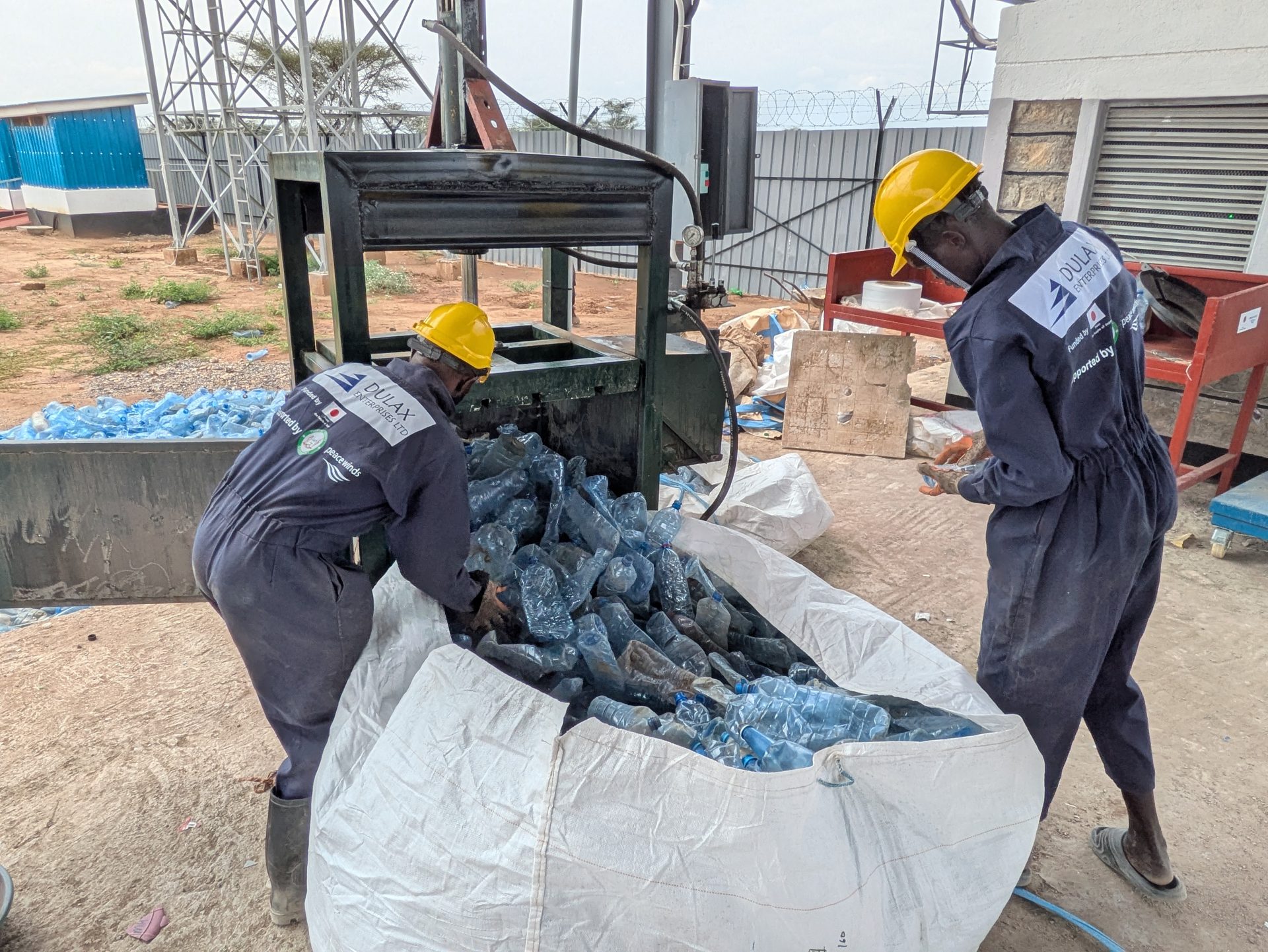
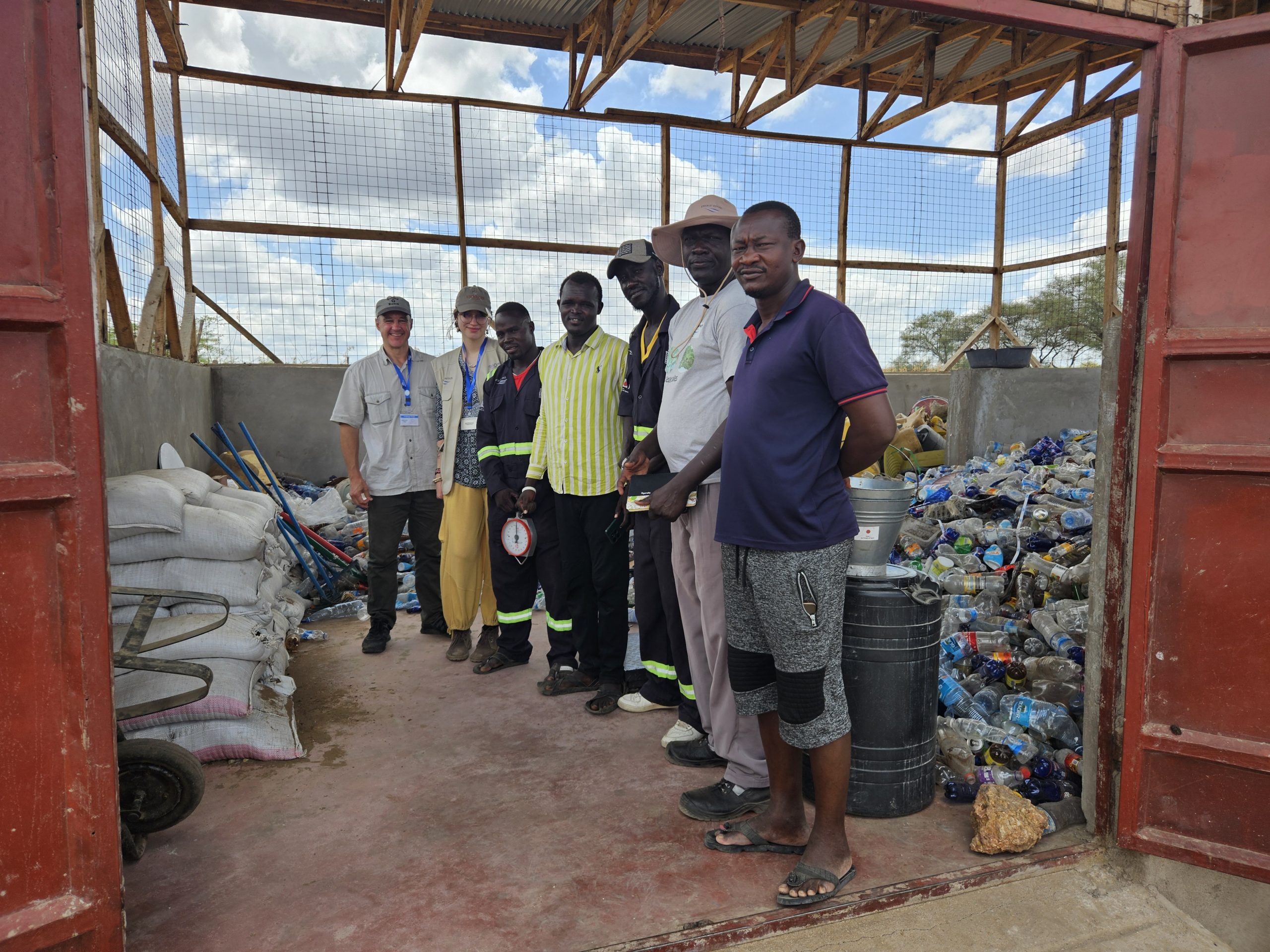
Coalition members collect garbage and bring it to one of the 13 waste transfer stations that Peace Winds helped construct throughout Kakuma. They separate out metals, glass, paper, and plastics and then sort the ubiquitous plastic bottles by color, often removing the bottle caps and labels for easier processing. There are also compost pits for food waste. The groups sell scrap metal and the compost they produce, which is bagged to be used as fertilizer for refugees’ home gardens. And, after costs are covered, they share the profits from the garbage collection and sale of recycled materials.
Peace Winds is now building a Materials Recovery Facility to better process plastic waste. This will grind bottles into pellets, which can more profitably be transported by truck for sale to recyclers hundreds of miles away–and possibly even used in construction materials, which are in high demand due to deforestation.
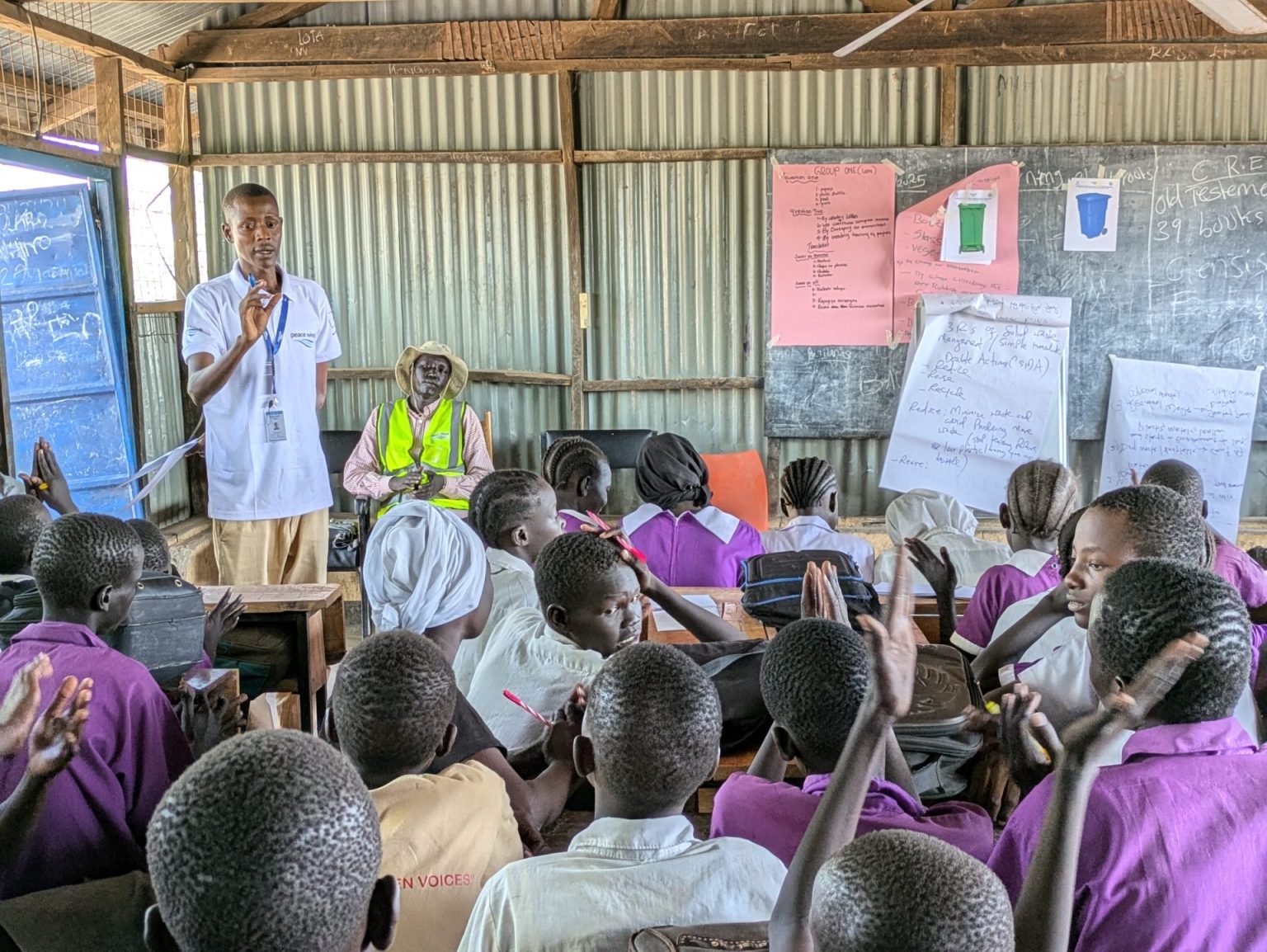
In elementary schools, children are also learning about protecting the environment, waste separation, and the importance of recycling through workshops conducted by Peace Winds. They often help their families take out the trash at home and have an important role in influencing community sanitation.
While many locals in this area of Kenya make a living through traditional livestock farming, livelihood opportunities are limited, especially for refugees. Cuts in international foreign assistance have also led to a decline in services for refugees over the last year, including food assistance, water, healthcare, and education. This is making it even more important to create systems that help residents become self-reliant after external support ends.