Speech Therapists Help Children Find their Voices Amid Trauma of Ukraine War
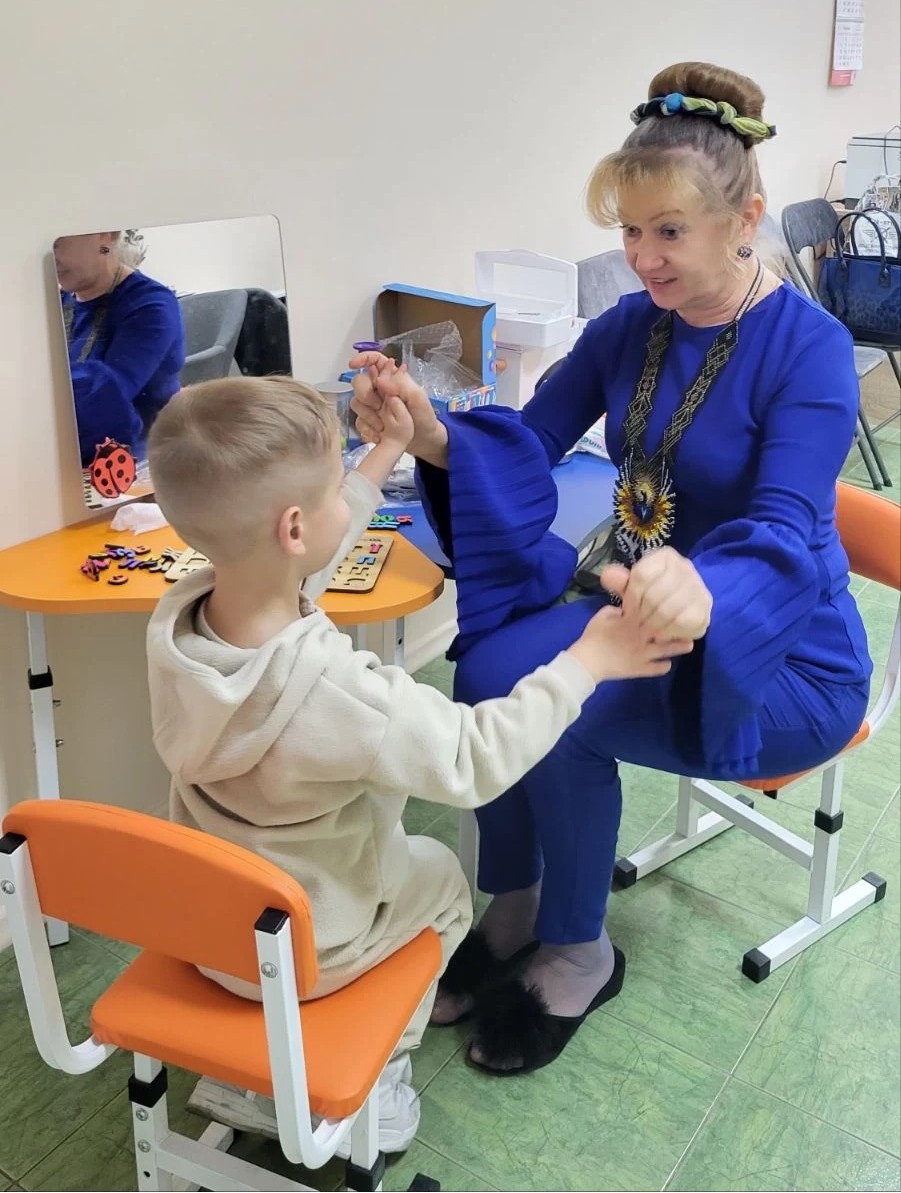
The trauma of living through the war in Ukraine is causing some people, many of them children, to develop speech disorders. The shock of a traumatic event or the prolonged stress of being displaced can lead to disorders ranging from stuttering to trouble processing language to mutism.
To help displaced children in northwest Ukraine, Peace Winds and our local partner organization, Eleos-Ukraine, have teamed up with clinical psychologists and speech therapists. The experts are providing speech therapy at our “Family Hub” in Zviahel–a city about 135 miles west of Kyiv. The center, which opened earlier this year, offers families a range of free services like legal advice, help with school and work opportunities, and therapy.
We spoke with Lina, one of the speech-language pathologists, about her experience working with the children.
Could you tell us about the situation in Ukraine, more than four years into the war, and the role of speech-language pathologists at the Family Hub?
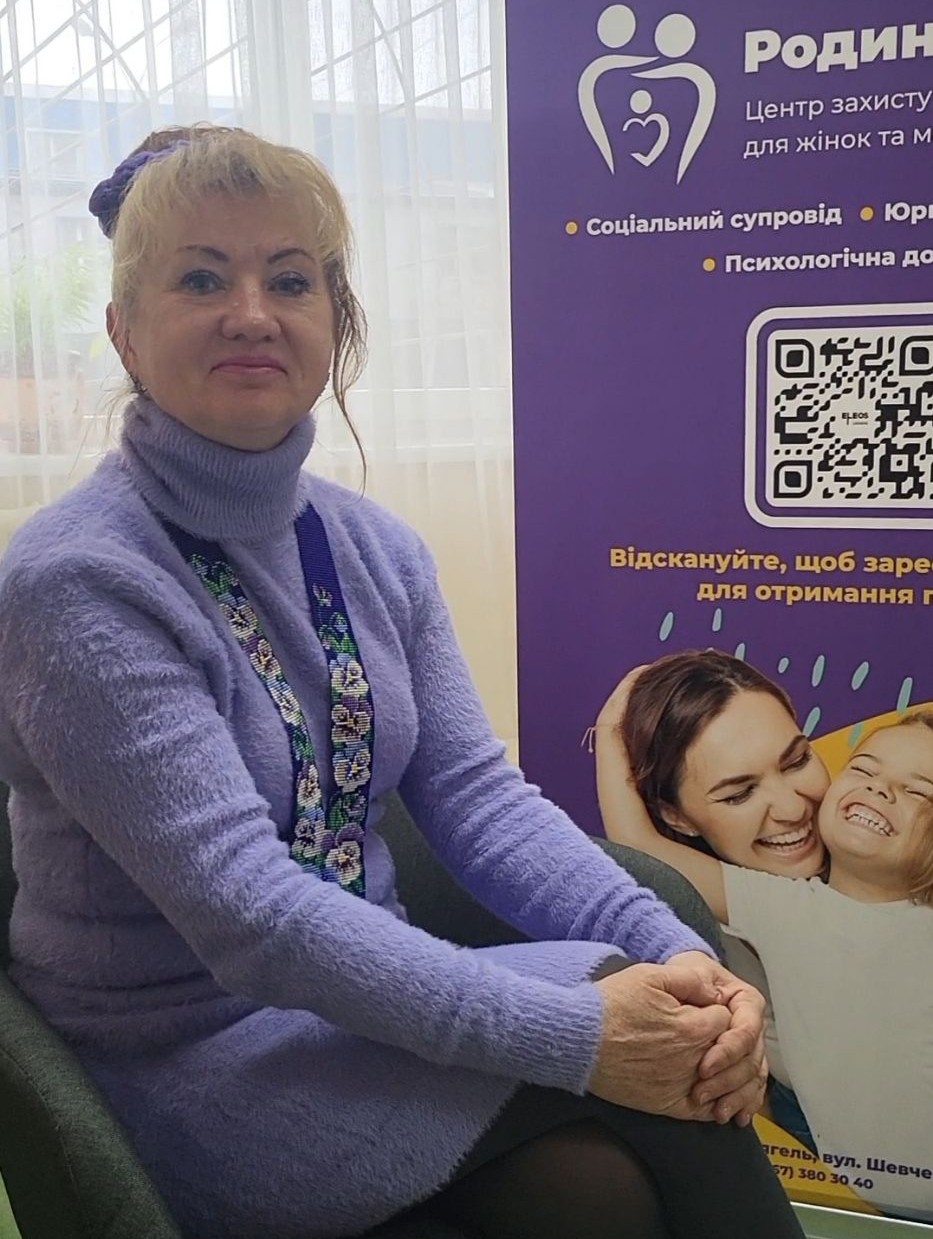
Lina: I’ve provided professional assistance to people with speech disorders for many years, and I believe the war is exacerbating them. Not only are the extreme stress and fear worsening existing disorders; they are also causing children who did not have speech disorders before the Russian invasion to develop them. Children and young people are especially vulnerable to the effects of stress. War-related trauma is known to cause a variety of speech disorders, from delayed language development to stuttering.
As a result, the demand for speech-language pathologists like myself has increased rapidly over the past year. My job has also gotten very busy. Since many speech disorders are caused by stress and trauma, at the Family Hub, we work in collaboration with clinical psychologists who specialize in working with children.
Which people in Zviahel are most in need of speech therapy?
Lina: Most of the children I see here are between 3 and 16 years old and have fled from areas near the front lines, like Kharkiv, Donetsk, and Zaporizhzhia. Some children have lost their ability to speak due to the shock of witnessing extreme events like explosions. A lot of displaced mothers also bring their children in for consultations if they have speech disorders due to developmental delays.
In one case, there’s a 3-year-old boy I see who fled from Sloviansk [a city in Donetsk Oblast that has suffered frequent attacks since February 2022]. His mother reported that he has hardly spoken since there was an explosion near their home. When he does open his mouth, he makes sounds that aren’t words, or he simply says “yes” or “no.”
If a child shows signs of a speech disorder, what should their caregivers do?
Lina: They rarely improve on their own, so it’s best to consult with a specialist as soon as possible. And most importantly, don’t put pressure on your child. If the people around them worry and try to force them to talk, it will only make the situation worse. When people come to the Family Hub, I make it a point to talk to the children in a cheerful manner. I want to create an atmosphere where they feel happy to spend time with me.
What does speech therapy look like at the Family Hub?
Lina: We start by imitating pronunciation, and we do it in a playful way. For example, I show pictures of animals the children like, such as a frog or a mouse. Then I demonstrate the pronunciation of the words with my mouth and encourage the children to pronounce them with me.
Some children show improvement after just a few sessions, and others may need several years. Either way, persistence is essential. An important part of that is for both parents and children to understand that they are in a safe and relaxing environment. You need to create a place that children want to return to, rather than a cold, impersonal atmosphere like a doctor’s office.
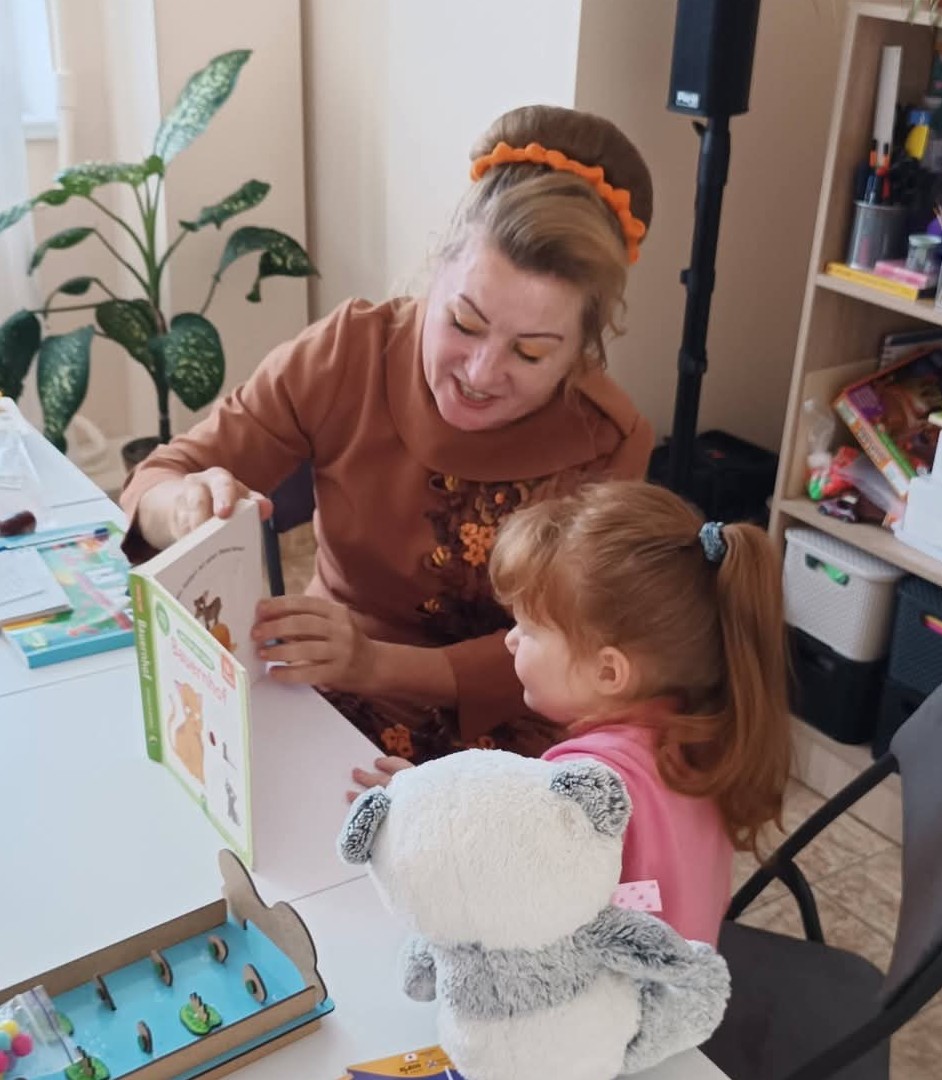
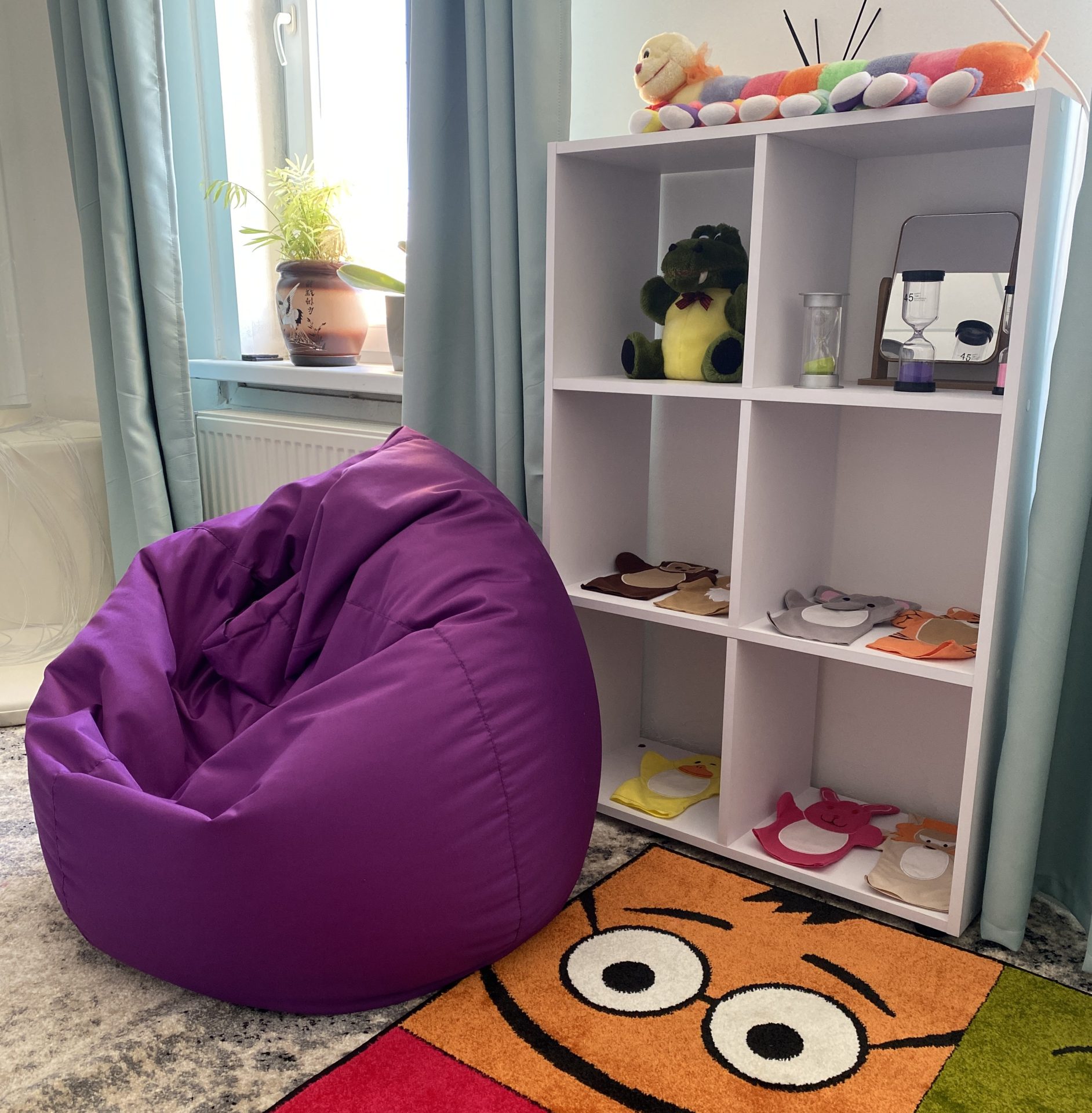
Lina works with a child (left); a speech therapy room at the Family Hub (right)
Going forward, what are some of the challenges you face in your work?
Lina: We receive so many applications. We want to be able to help as many people as possible, but we just can’t meet everyone’s needs. I think this shows just how many people are dealing with language disorders since the war. After they learn about the Family Hub, we receive inquiries from parents of children with speech impairments not only in Zviahel but from all over the country.
It’s not just children. Many adults in Ukraine are facing challenges ranging from vocal disorders to speech disorders as a result of a stroke. And although we haven’t seen any at the Family Hub, there are veterans who have developed disorders due to the stress of combat or physical brain damage. It can be really challenging to work with them.
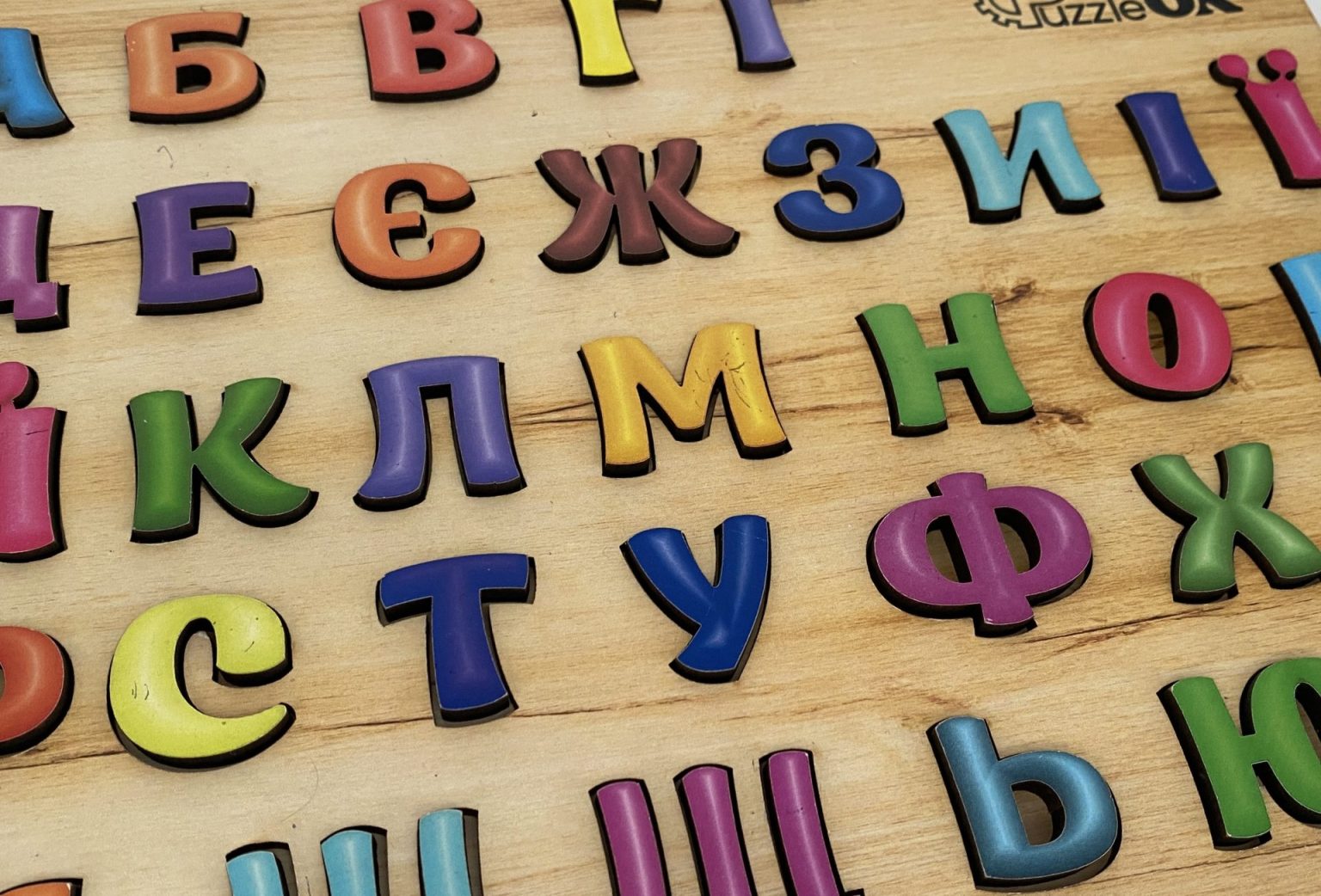
Also, although speech therapy in Ukraine has been developing quickly in recent years, it is unfortunately still in the early stages. Ironically, a lot of speech therapy methods were developed in Russia, so many specialized books are written in Russian. Ukrainian uses the Cyrillic alphabet (like Russian), but it has its own unique consonants, vowels, and symbols. So there is a need for more specialized books for Ukrainians.
Even in Zviahel, far from the front lines, air raid warnings are issued every day, and daily scheduled power outages last for hours. We are grateful for staff like Lina who are working tirelessly through such difficult circumstances to support parents and children at the Family Hub.
With no end in sight to the war, Peace Winds will continue to support the people of Ukraine as much as we are able. To help us further this mission, please donate by selecting “Ukraine” in the dropdown menu. We are so grateful for your support.