Relief and Recovery After Historic Torrential Rain in South Korea
In mid-August, record-breaking torrential rainfall caused severe flooding and widespread damage across southeastern South Korea. During a three day period, the city of Geoje recorded almost 1 meter of rain–more than three feet. In the immediate aftermath, Peace Winds teams on the ground in Korea began delivering emergency relief in Geoje and Tongyeong, two of the hardest-hit cities in South Gyeongsang Province. Staff continue to support survivors as they begin to recover.
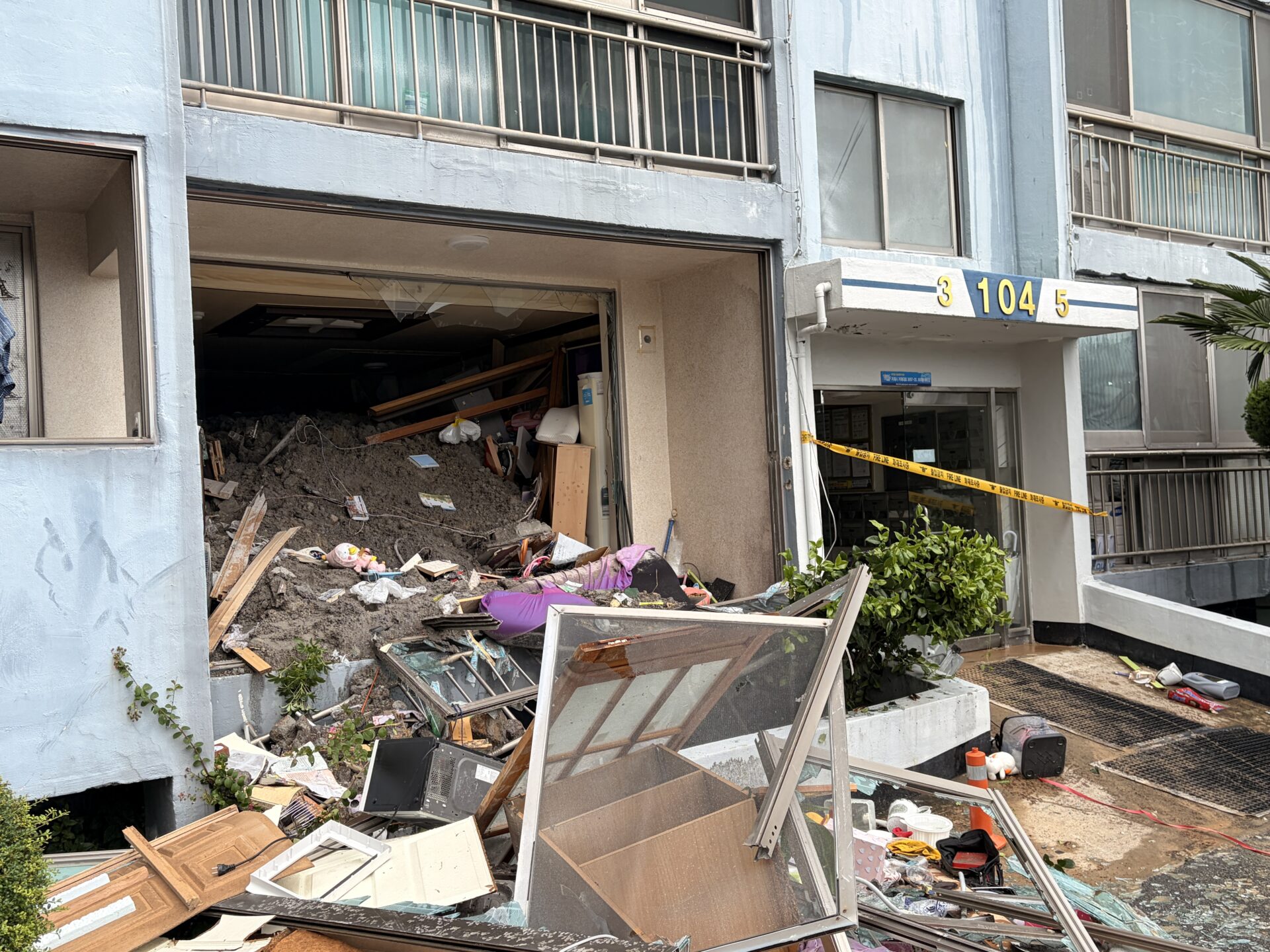
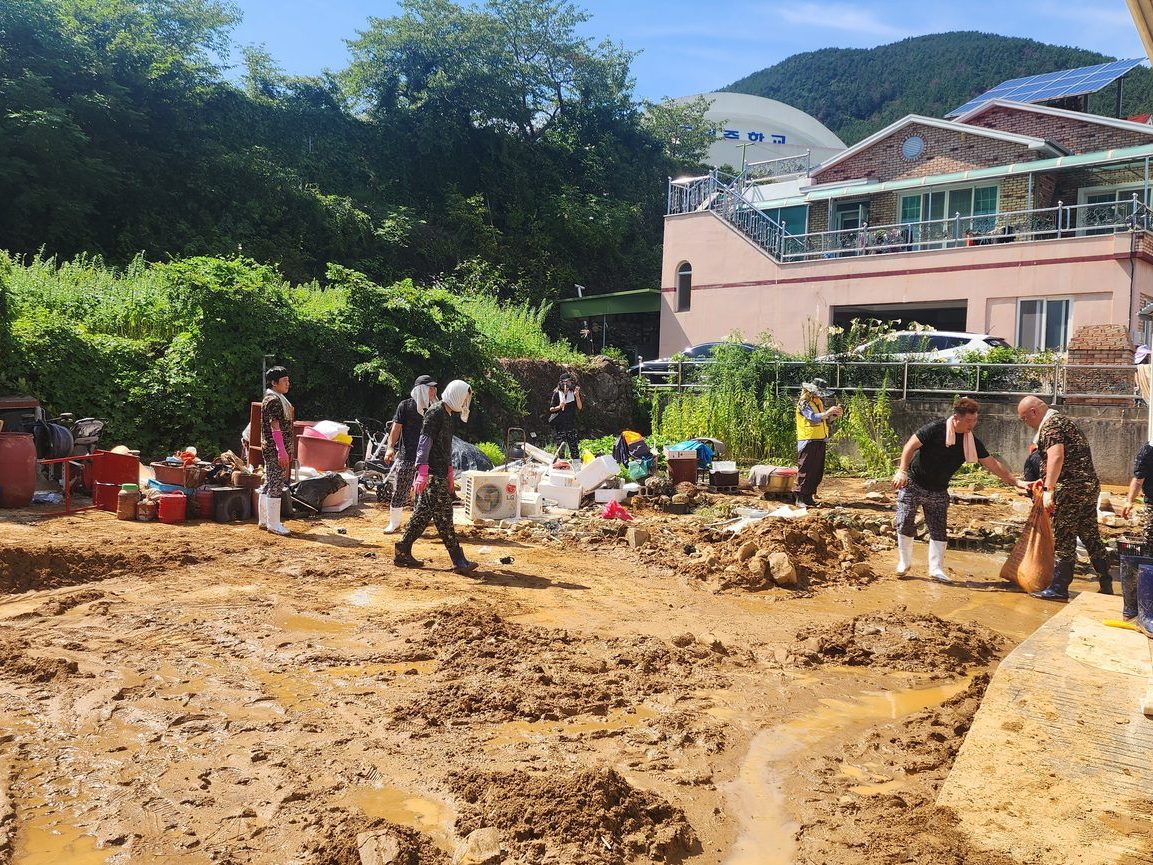
At the peak of the disaster, as many as 513 people were evacuated, and power and water outages affected several thousand households. The region also experienced numerous landslides while homes, roads, and rivers flooded, and more than 740 acres of farmland were damaged. Many people here are farmers, so the damage was a major blow to their livelihoods.
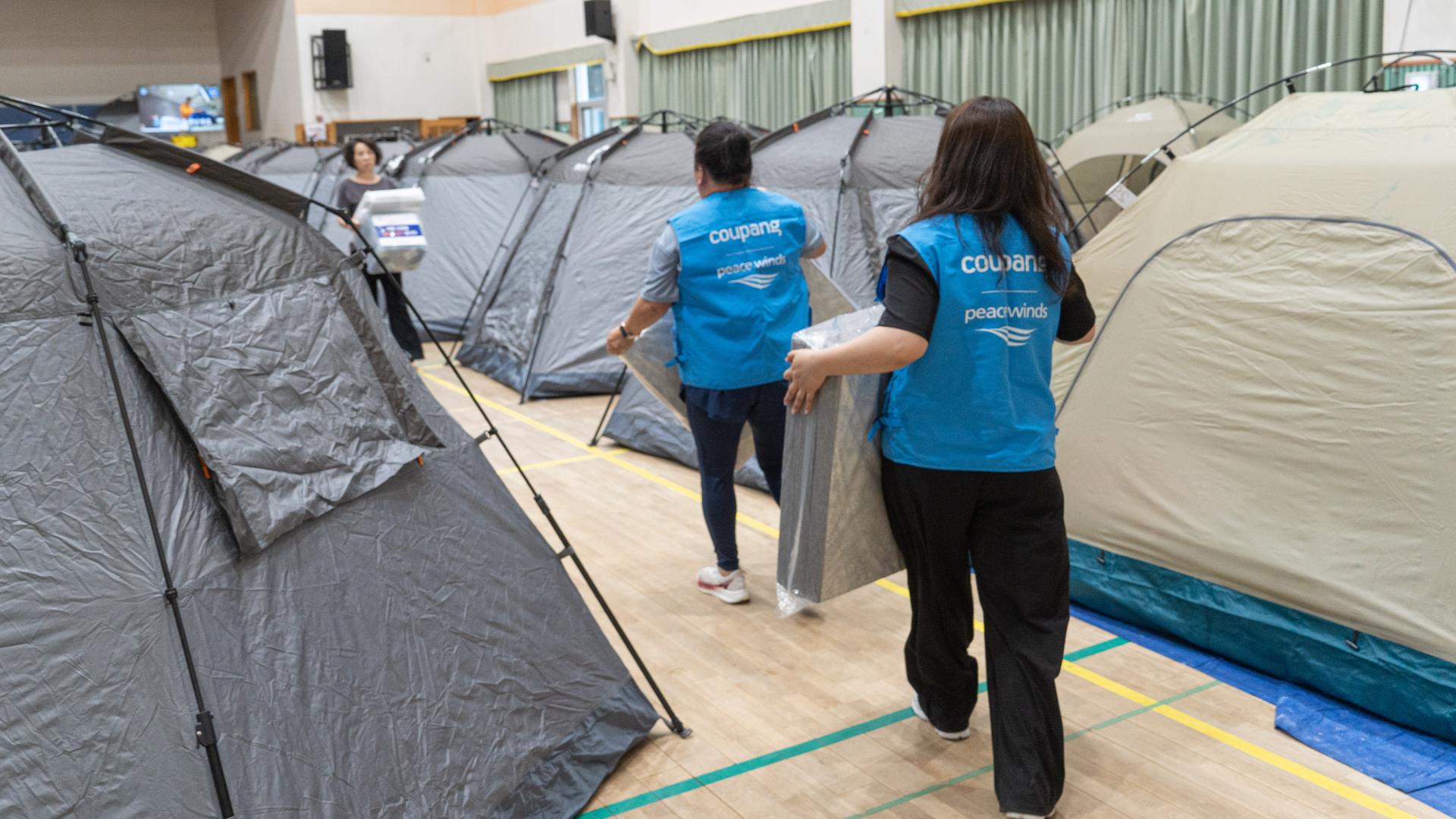
At evacuation centers, evacuees slept in tents on thin sheets laid over hard floors, making adequate rest nearly impossible. To address this, Peace Winds distributed 200 emergency relief kits to evacuees sheltering at an elementary school. Each kit contained 10 types of essential items, including a portable three-layer mattress, a comforter, pillows, towels, socks, toiletries, and a storage box. The foldable mattresses were well received, with residents noting that they were thicker than those typically provided in shelters and allowed for more restful sleep.
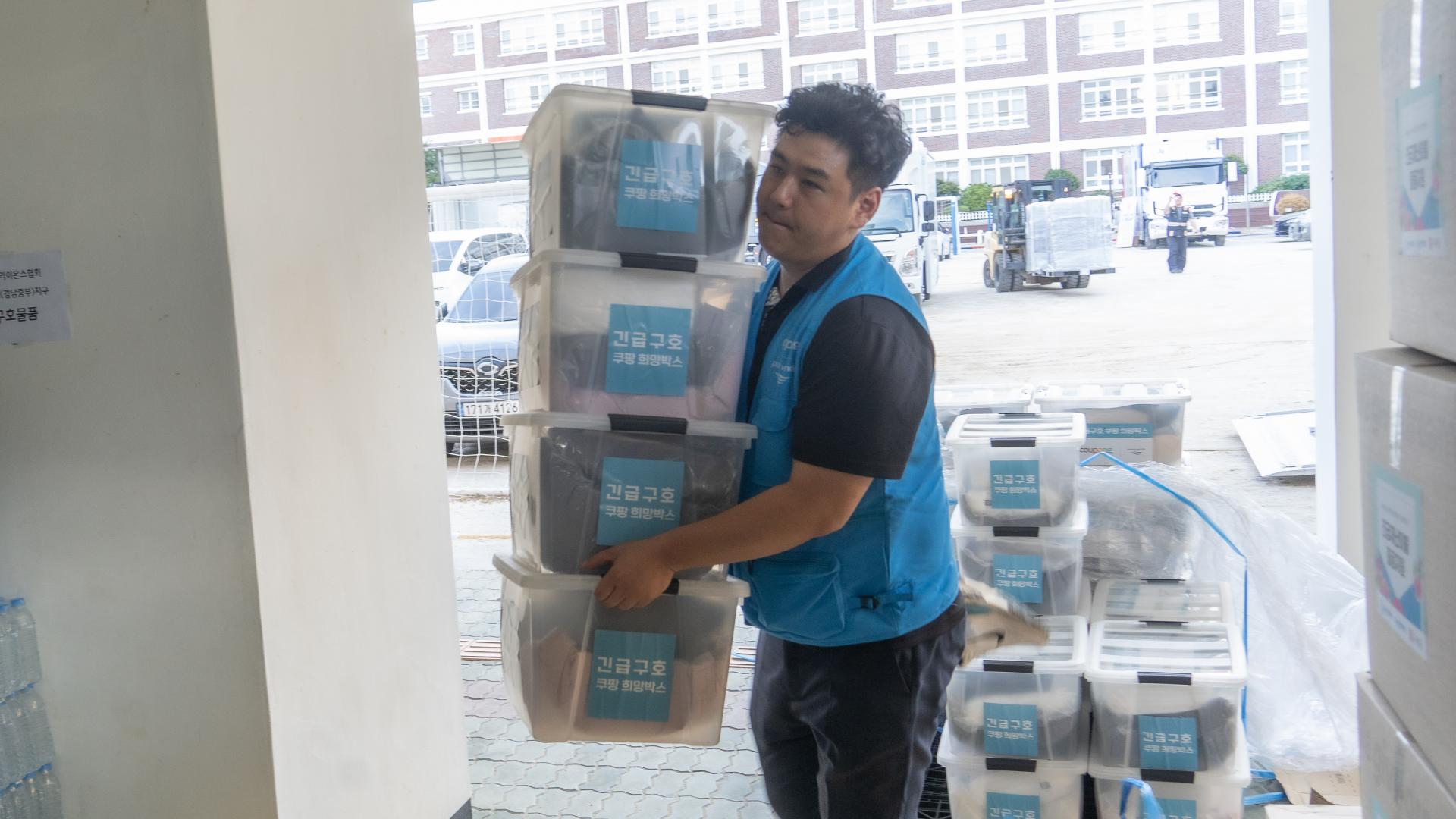
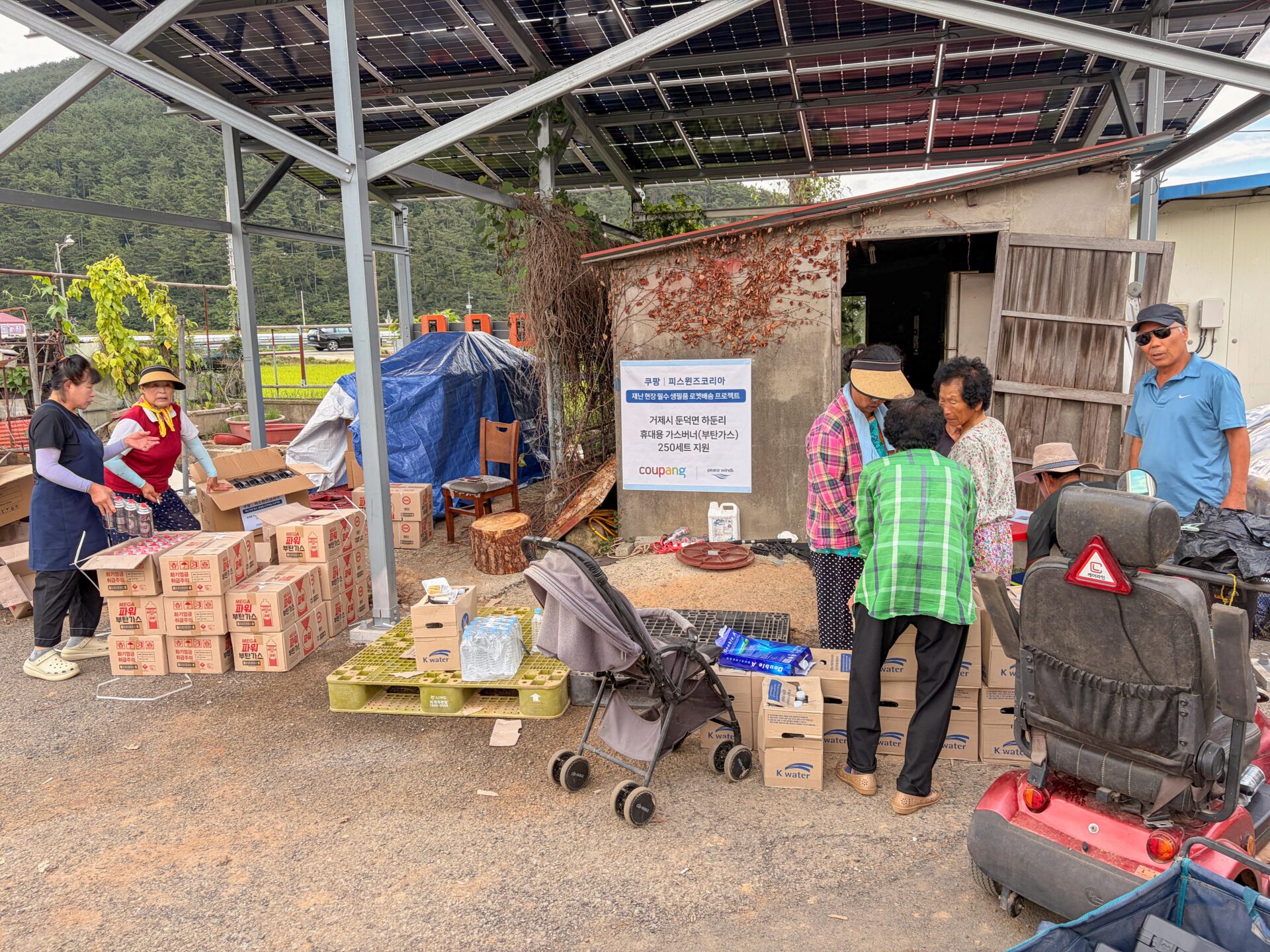
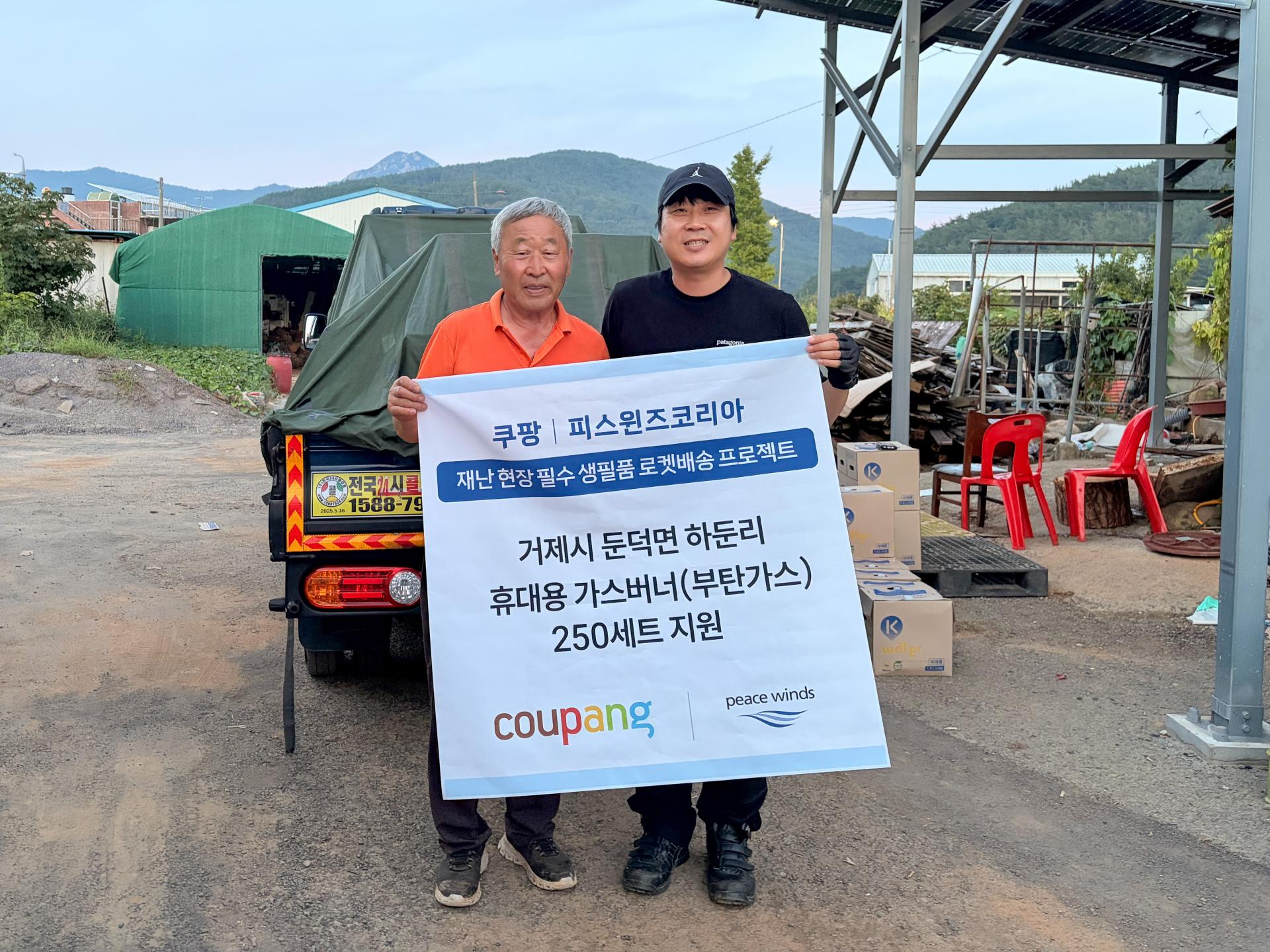
Hadun-ri, a village of approximately 200 households in Geoje City, suffered severe damage. Although some homes withstood the flood, many residents continue to face water and power outages, gas shortages, and limited transportation. Meal distribution also ended before gas service was restored, leaving residents with no way to cook. To close this gap, Peace Winds provided 250 sets of portable gas stoves and butane canisters to approximately 200 families, enabling them to prepare meals while essential services were being restored.
In disaster response, the reality is that there are usually not enough relief supplies to meet the needs of every survivor. When this happens, village heads or disaster response leaders are responsible for deciding which households receive aid, and this process often sparks conflict and resentment.
Peace Winds recognizes that visible damage is not always a reliable measure of who has suffered most or who most needs support. Even families whose homes were not directly flooded can be seriously affected by infrastructure damage, travel restrictions, job loss, and a stalled local economy. So our team listened closely to local residents who knew the community best, allowing us to determine what was truly needed. This approach enabled us to address a broader range of needs for more families while mitigating division within the community.
So far, Peace Winds has provided daily necessities, hygiene items, and cleanup equipment as part of our emergency response. We also supplied residents and volunteers with items to prevent heat-related illness, like sports drinks and cooling towels, as they began cleanup work amid extreme summer heat.
Geoje and Tongyeong have large elderly populations, including many who live alone, and these residents require additional support to return home and resume their lives. Going forward, Peace Winds will coordinate with local welfare agencies to provide tailored support so that vulnerable residents can get back on their feet. We remain committed to staying engaged with affected communities, identifying their evolving needs and responding at every stage of recovery.
Peace Winds thanks its many donors for supporting the response, including Chevron, which has made a generous contribution for relief and recovery activities.