One Month Later: Going the “Last Mile” to Care for Carers after Kumamoto Earthquake
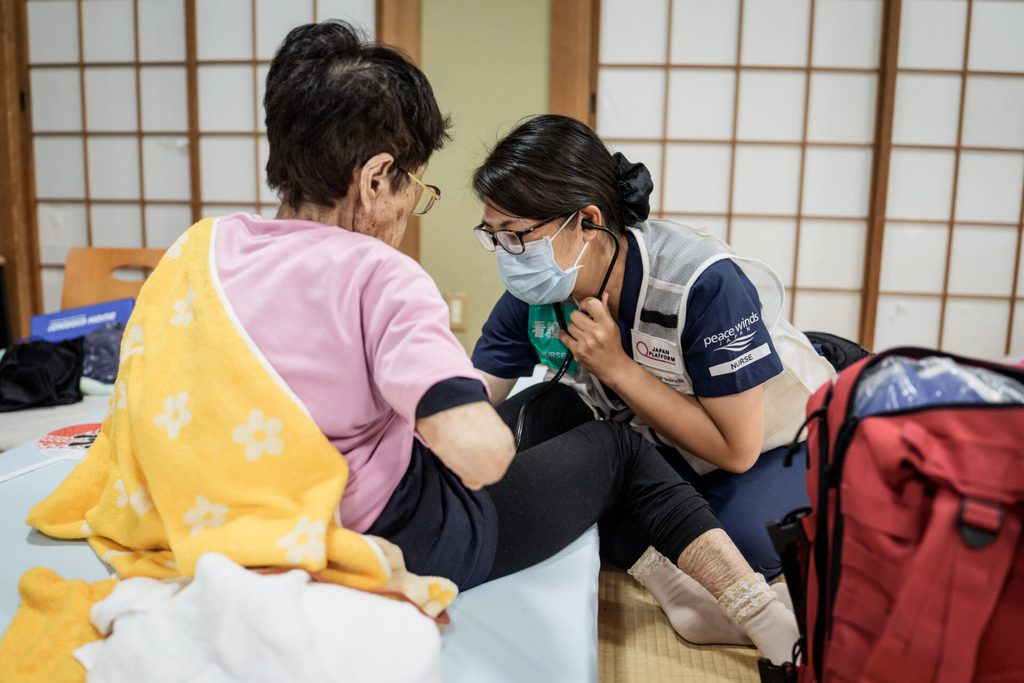
Today marks one month since the latest deadly earthquake in Japan’s Kumamoto Prefecture. The earthquake killed nearly 40 people, and 43,000 homes were damaged. Now, many evacuation centers are closing or scaling down their activities, and some businesses have reopened.
It may sound like a good sign that just over 2,400 of those residents are left in the remaining evacuation centers. But this hides the fact that many have returned to severely damaged homes where access to aid is much more limited. Elderly and disabled residents are particularly vulnerable, and those working hardest to care for them are overstretched–their own lives have been uprooted by this disaster, too.
Since Peace Winds teams arrived in Kumamoto within hours of the earthquake, their goal has been to ensure that no one gets left behind. To that end, we are expanding our focus beyond evacuation centers and into the blind spots where survivors are often overlooked.
Although some residents have managed to stabilize their damaged houses, most are still without running water. Supermarkets are closed, and when they are open, supplies are scarce. Electricity and gas has been restored in some places, but cooking is virtually impossible without water. Many parents say they are increasingly worried that their children aren’t eating properly.
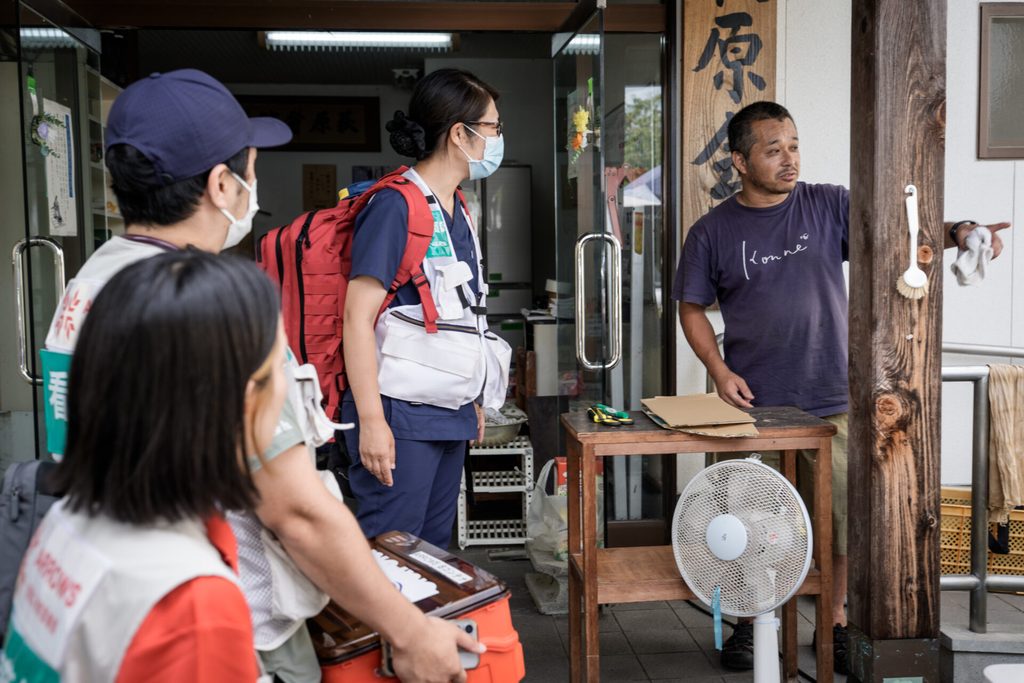
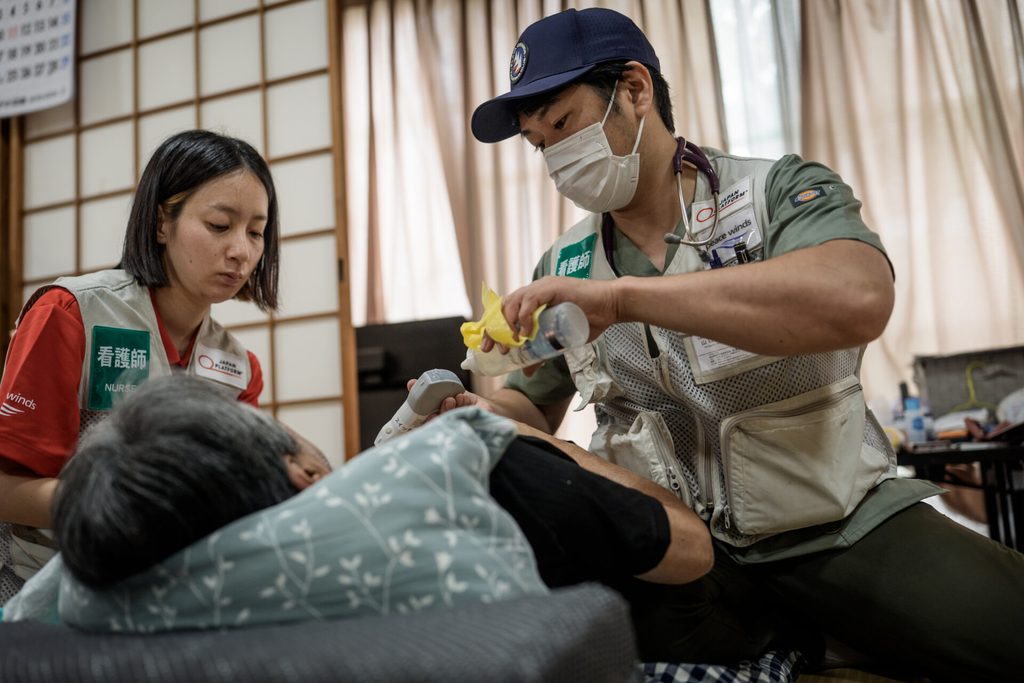
Most government-provided relief supplies are distributed at evacuation centers. Priority is given to them, and facilities like toilets and showers are typically set up there. While some centers allow residents from other places to pick up supplies, this can be a challenge for any number of reasons–like distance, damaged roads, or lack of transportation. This phenomenon, where relief supplies do not make it all the way into the hands of those who need them, is known as the “last mile problem.” Elderly and disabled survivors have a particularly hard time.
“In rural areas, especially those with a lot of elderly residents, there are many facilities that care for vulnerable community members on a regular basis,” says Ms. Shingai, a Peace Winds nurse, speaking of services like assisted living, group homes, and in-home nursing. “But when a disaster strikes, the staff running them are also affected, and despite being overwhelmed with their own lives, they still have to care for those in need.”
This includes taking on the responsibility of driving back and forth to distribution centers for supplies. Shingai says that this can double or even triple their workload, and many are facing burnout.
“Some staff members live in evacuation centers themselves, or sleep in their cars,” she says. “When I spoke with them, it was clear that they were severely understaffed. And if these facilities close, people sheltering at home will have no support.”
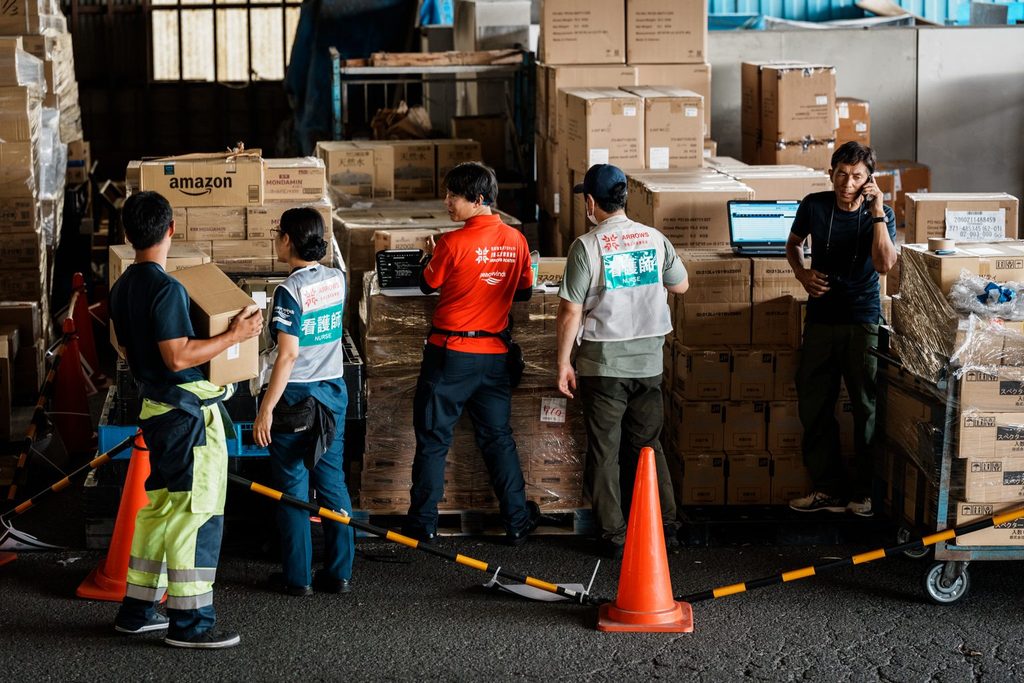
So Shingai and the team came up with a system that supports both workers and those they’re supporting. Relief supplies are now delivered to warehouses managed by Peace Winds. Our staff can then deliver precisely what survivors need directly to their homes and assisted living facilities within one day.
“This type of support was a first for us,” she says. “But by supporting those who are supporting others, we’ve been able to reach an even greater number of people in need. I think we’ve established a truly meaningful new model for aid.”
In addition to relief supplies, Peace Winds is expanding door-to-door wellness checks for those sheltering at home. We will also help those who need it transition from evacuation centers into temporary housing units as they become available in the coming weeks. And our animal rescue team recently opened a doggy daycare so that families can more easily take care of tasks like home repairs and errands during the day without worrying about care for their pets.
Although headlines have faded, the road to recovery is just beginning. We have been deeply moved by the kindness readers like you have shown for the people of Kumamoto. Your generosity is what will allow us to continue to stand by the community’s side in the coming months.