Responding to Typhoon Kalmaegi in the Aftermath of Philippines Earthquake
On November 4, 2025, Typhoon Kalmaegi made landfall in the Philippines. At least 114 people have been killed, and hundreds of thousands were forced to evacuate. The typhoon also caused widespread flooding on Cebu Island, which was already devastated by a 6.9 magnitude earthquake that struck in September.
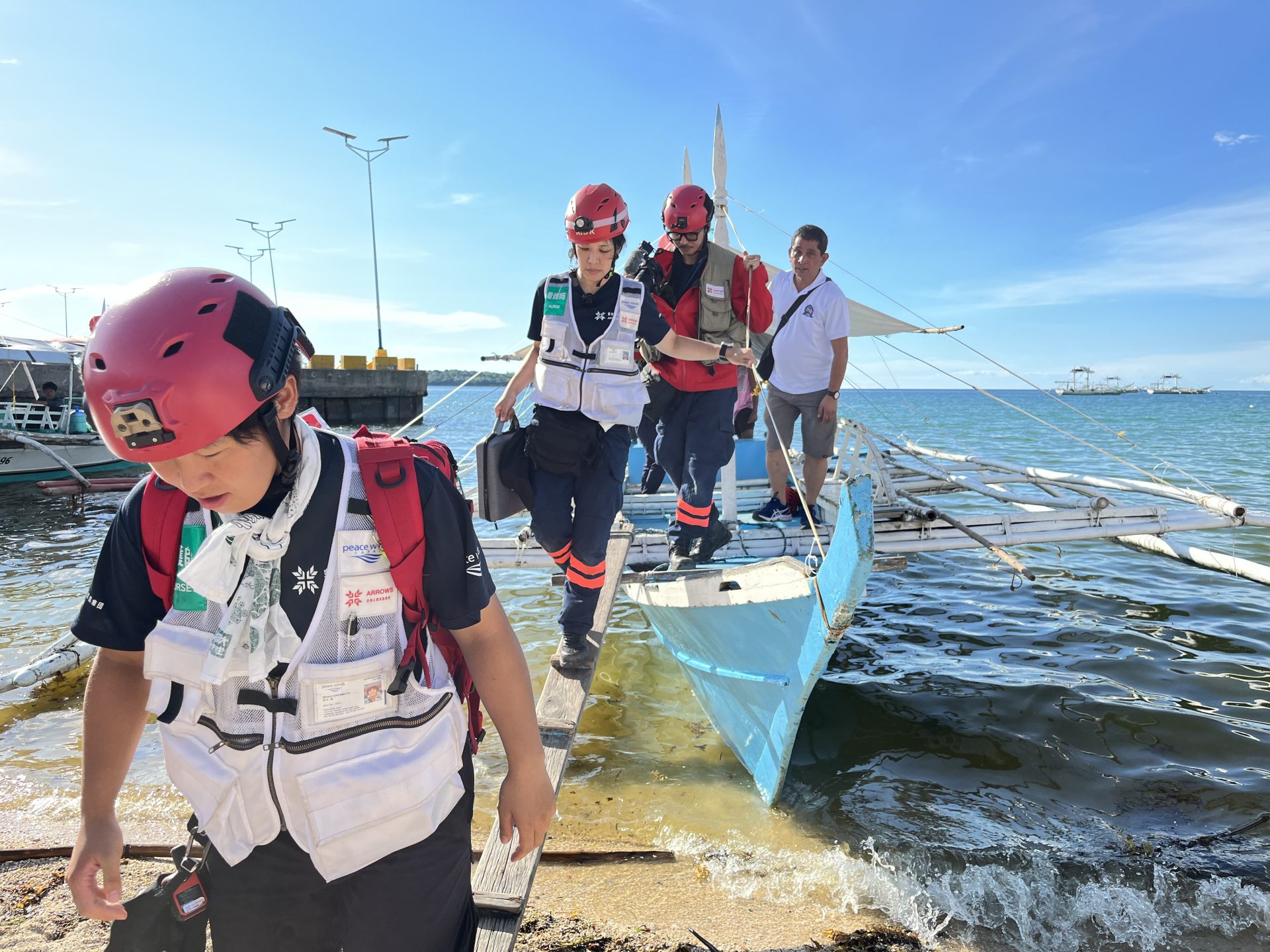
In response to the typhoon, Peace Winds’ emergency disaster team is assessing survivor’s needs and providing emergency assistance. Staff who were already stationed in the Philippines for the earthquake response have been standing by to assist in the wake of Typhoon Kalmaegi and are preparing relief supplies. Your donations will help provide relief, such as food, water, and much-needed essentials.
To donate to the Philippines earthquake response, please choose “The Philippines Response” in the donation dropdown menu, or click here to learn more about donating to Peace Winds.
Cebu Island Earthquake Relief
For the past five weeks, Peace Winds teams and local partners in the Philippines have been providing relief for communities affected by the earthquake that struck Cebu Island on September 30. While staff were conducting needs assessments, they learned that there was a shortage of supplies on Gibitngil Island, a small, remote island north of Cebu.
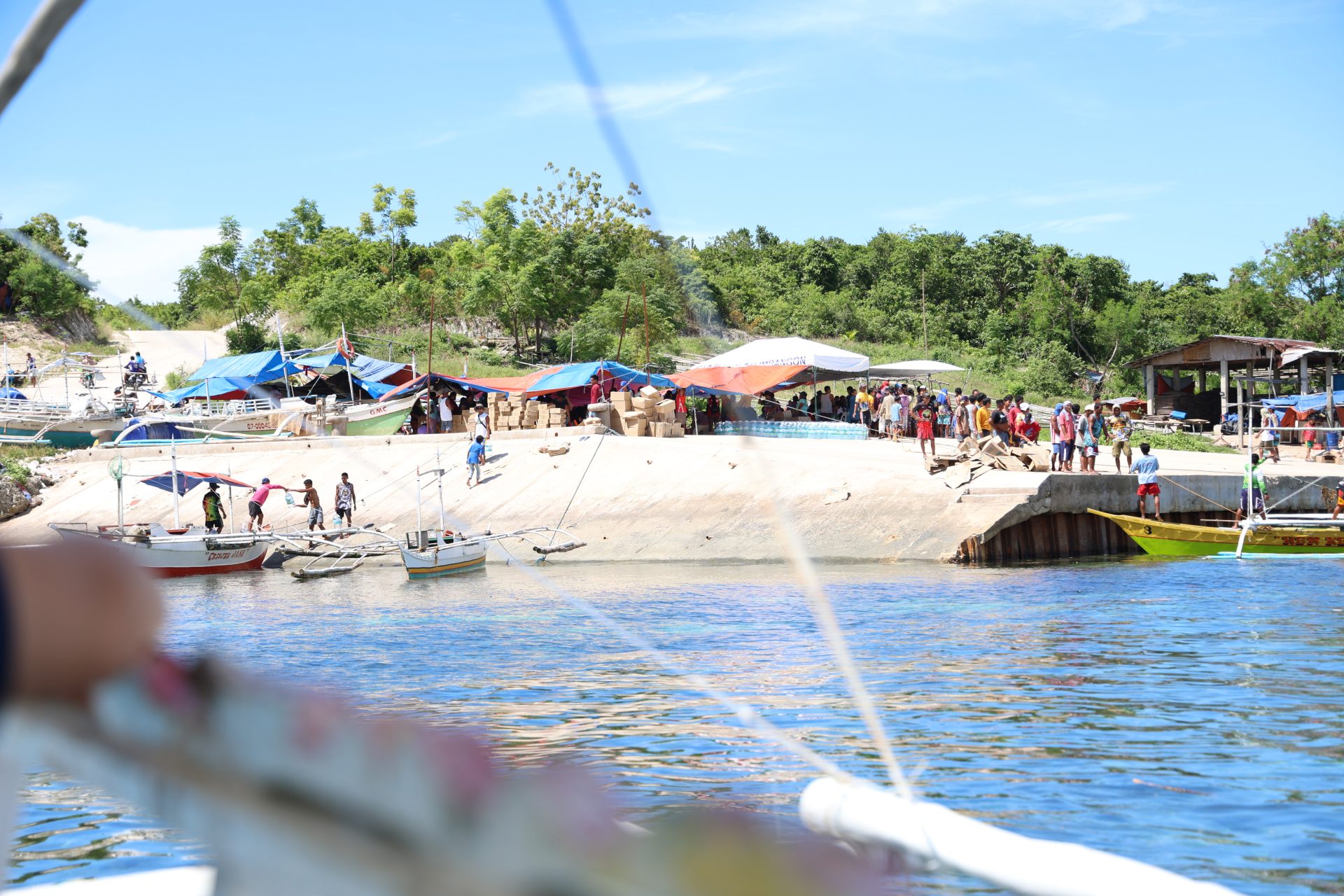
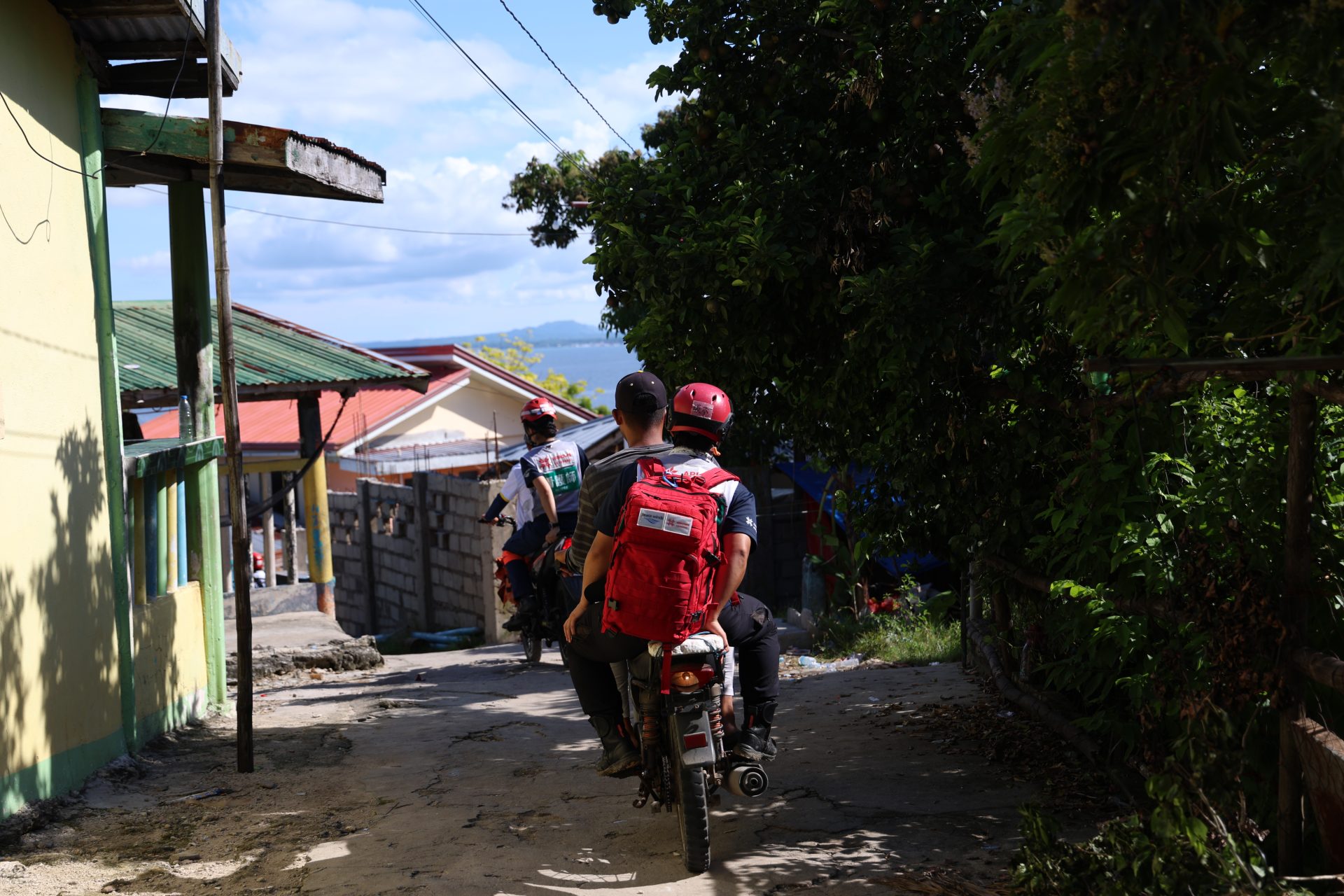
Food and water delivered to Gibitngil Island in preparation for distribution (left); Peace Winds staff travel the island by motorbike (right)
Gibitngil Island is home to about 667 households. However, fear of the earthquake and subsequent aftershocks means that residents have been unable to stay indoors, and they have instead been living in tents or tarps set up in front of their homes or in vacant lots. This is a common occurrence for many earthquake-affected communities that Peace Winds has supported.
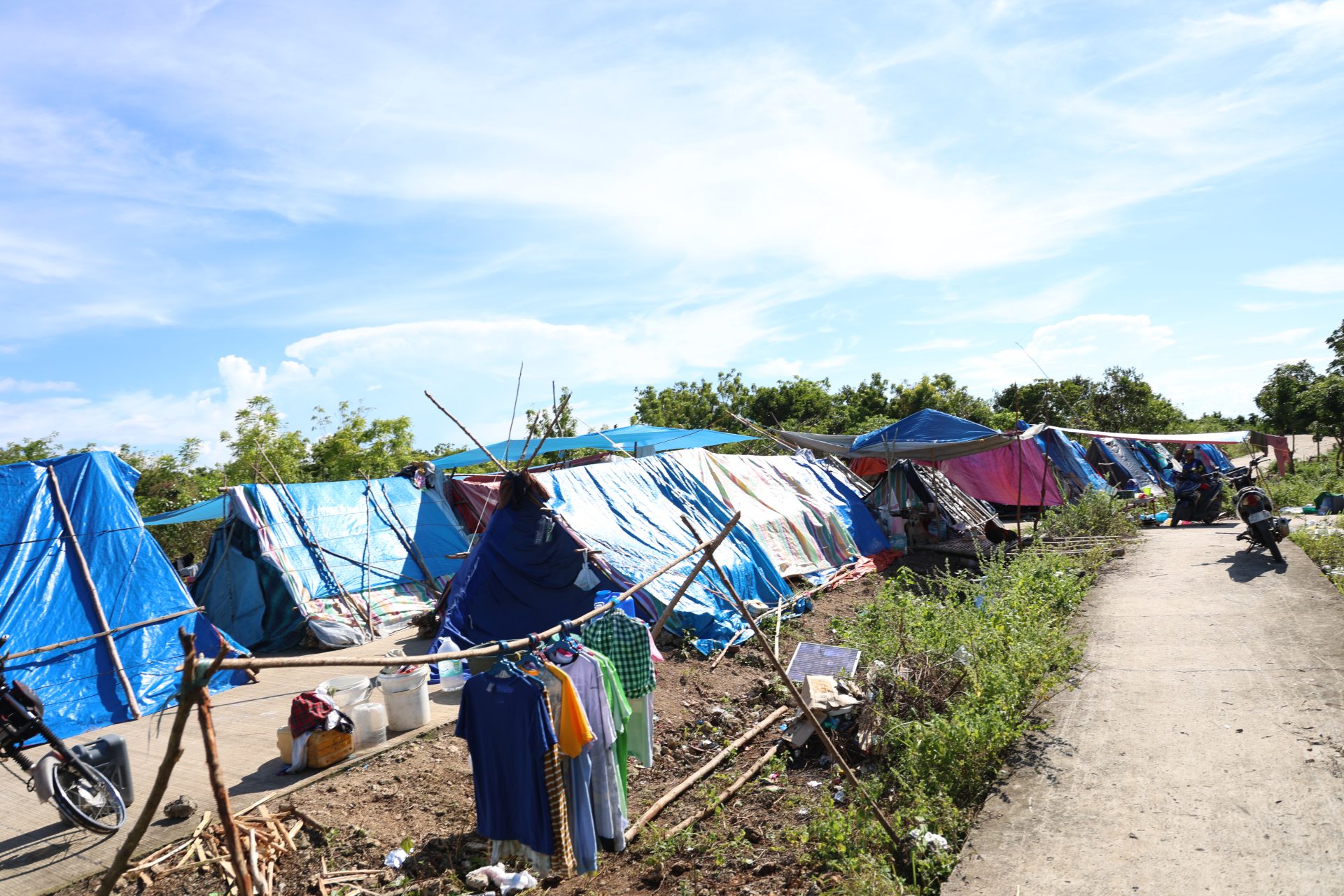
One of the biggest challenges is the number of people experiencing post-traumatic stress. Since September 30, small aftershocks have occurred daily, with several exceeding magnitude 5. Staff members from Japan who are supporting the response on the ground have said, “it feels different from the way earthquakes shake in Japan” and that the aftershocks feel like “a big thud, like the earth rumbling.” This trauma and fear never leaves the bodies or minds of many survivors, and they often have a hard time sleeping at night as a result.
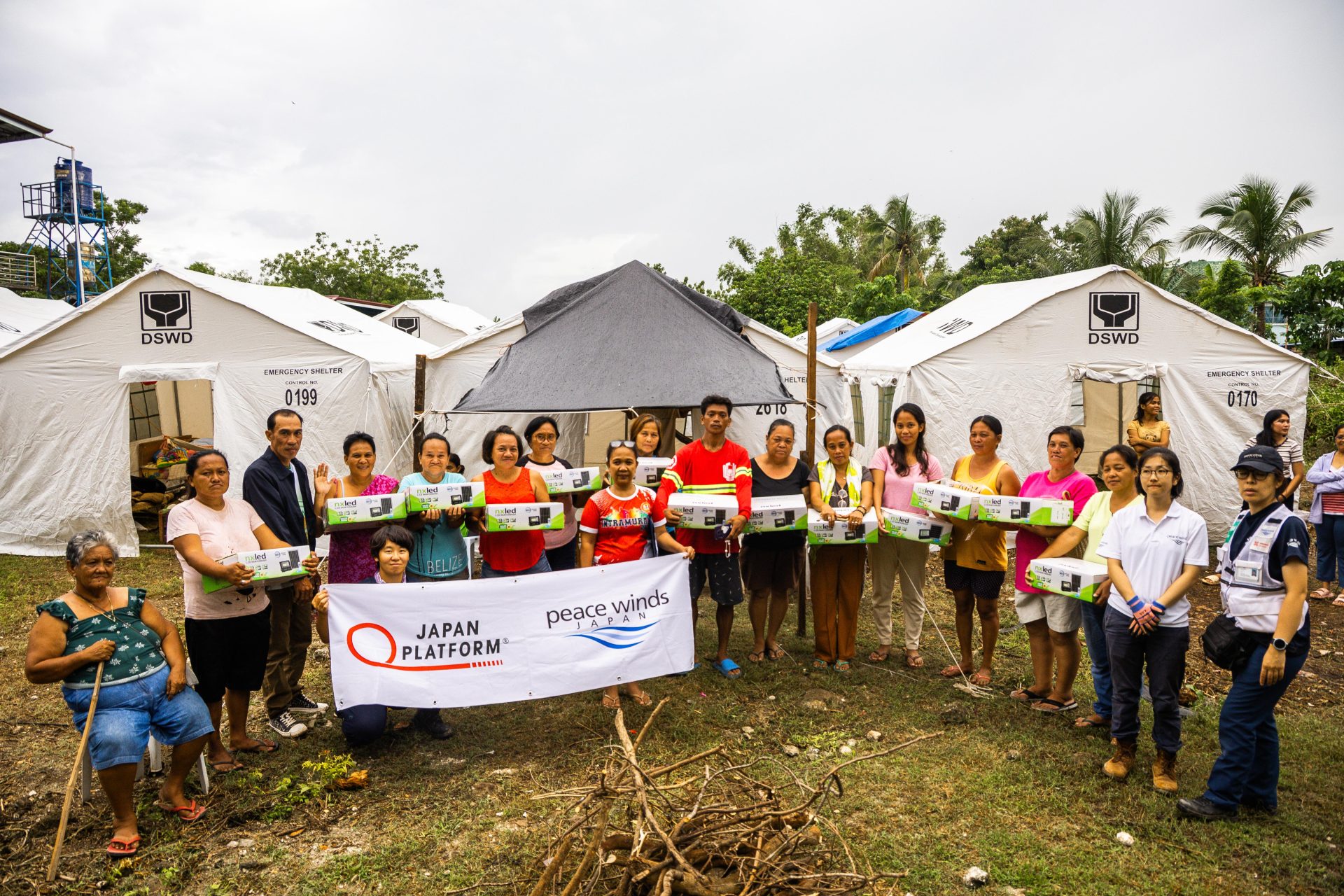
Although generators provided some electricity on the island, it varied from place to place. Areas without streetlights left evacuees in the pitch dark at night, adding to the anxiety they were feeling. So Peace Winds distributed solar lights throughout the affected communities.
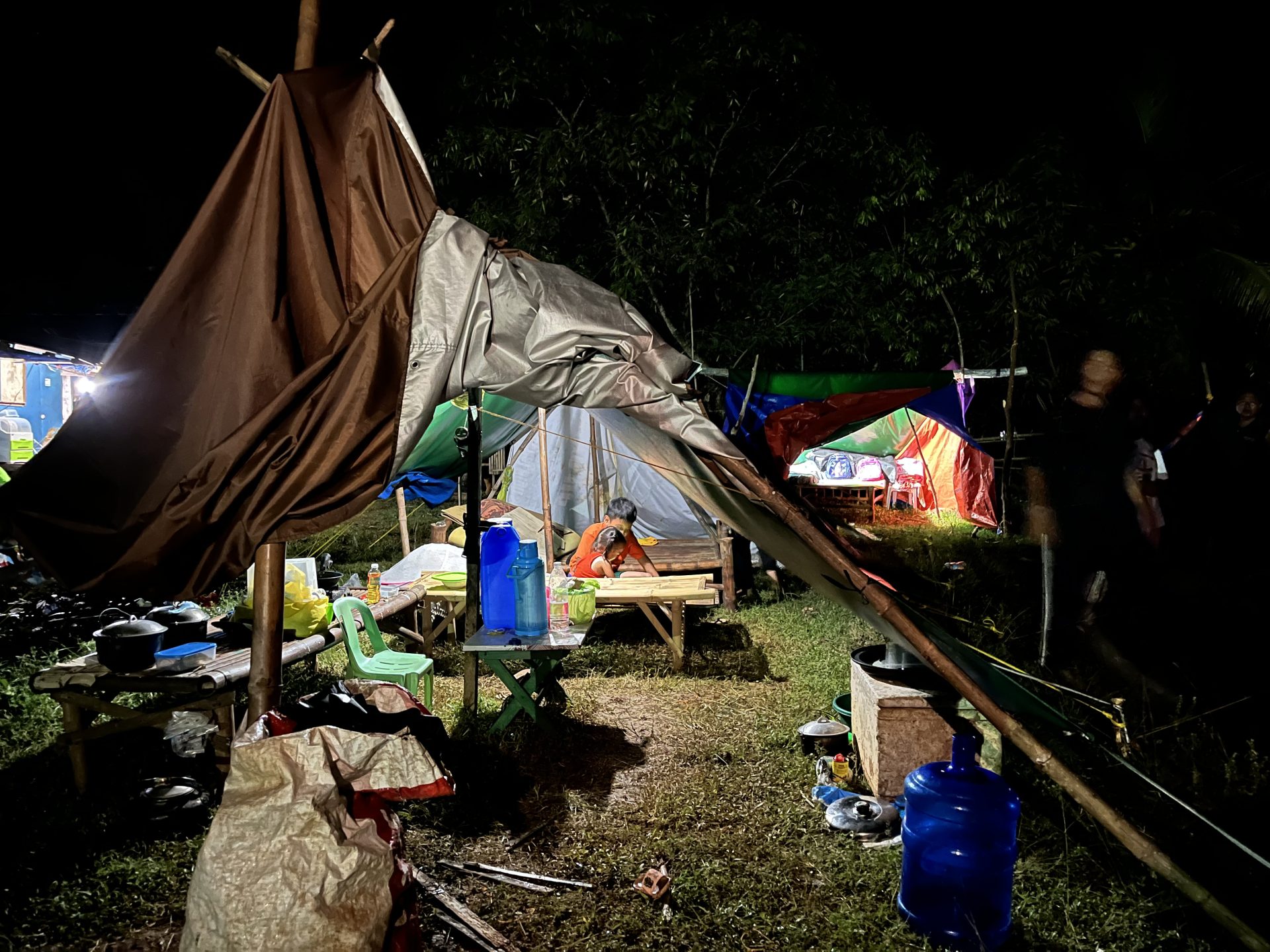
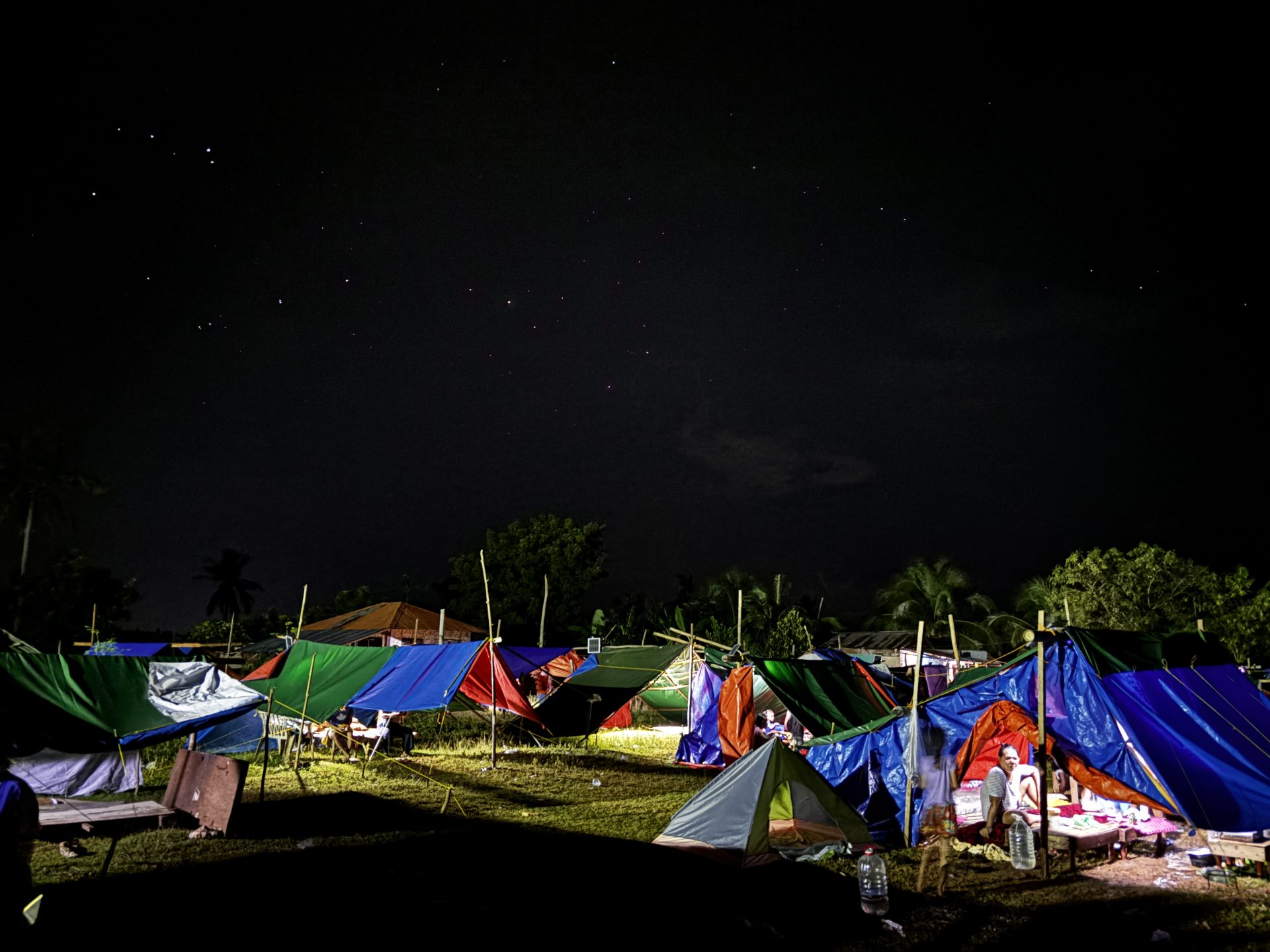
Staff reported that they were greeted with “thank you”s as they interacted with evacuees. At one evacuation site, tents were lit up at night, allowing children to run around and play even in the dark. When they spotted Peace Winds staff, they chased after them and shouted “thank you” with smiles on their faces.
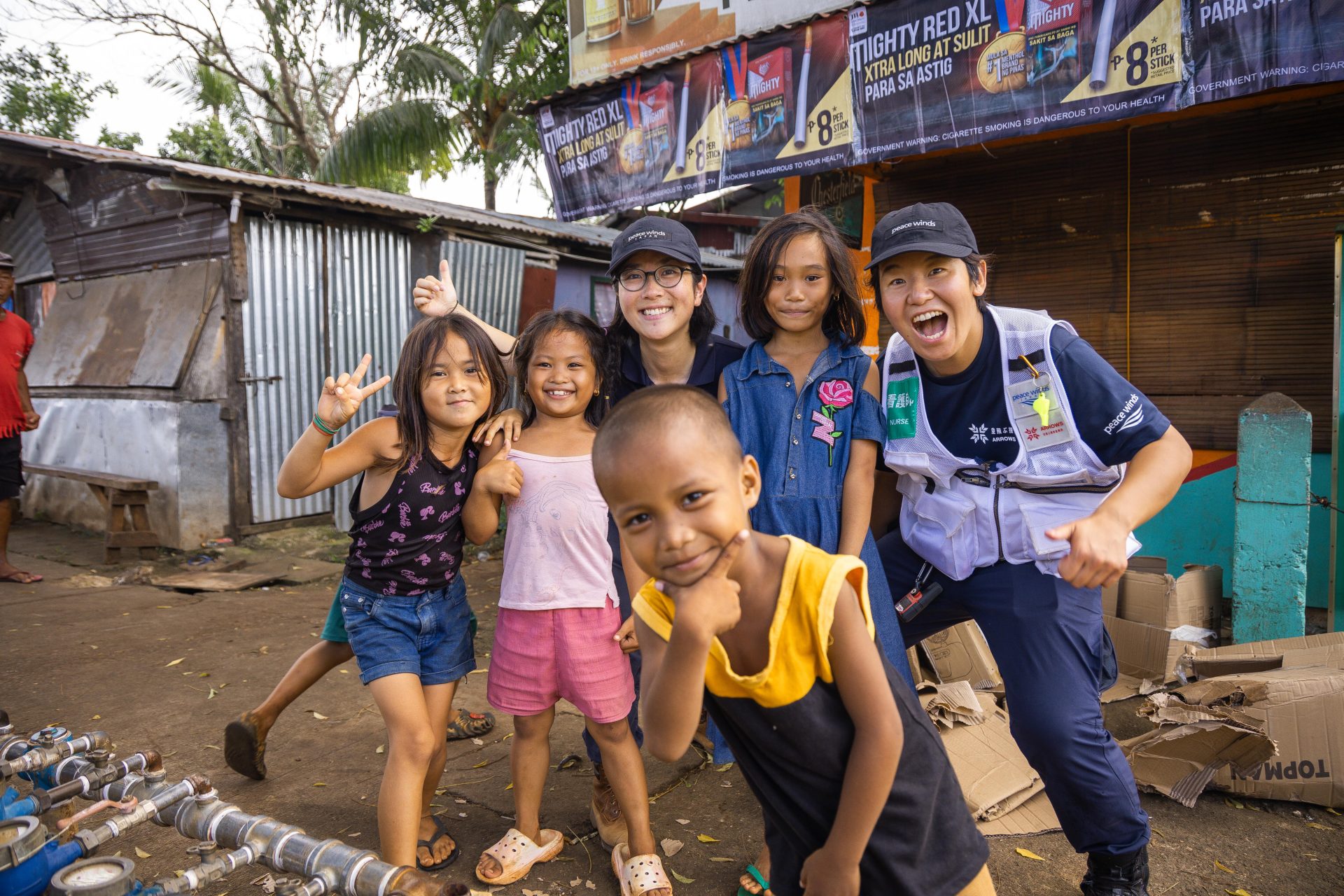
“I was surprised by the warmth of the residents living in the evacuation zones, and at the same time, I was moved by their strength,” said one Peace Winds nurse deployed in the Philippines. “I would be very happy if our support, which has been made possible by the collaboration of many people, could help give these survivors the strength to start walking again.”
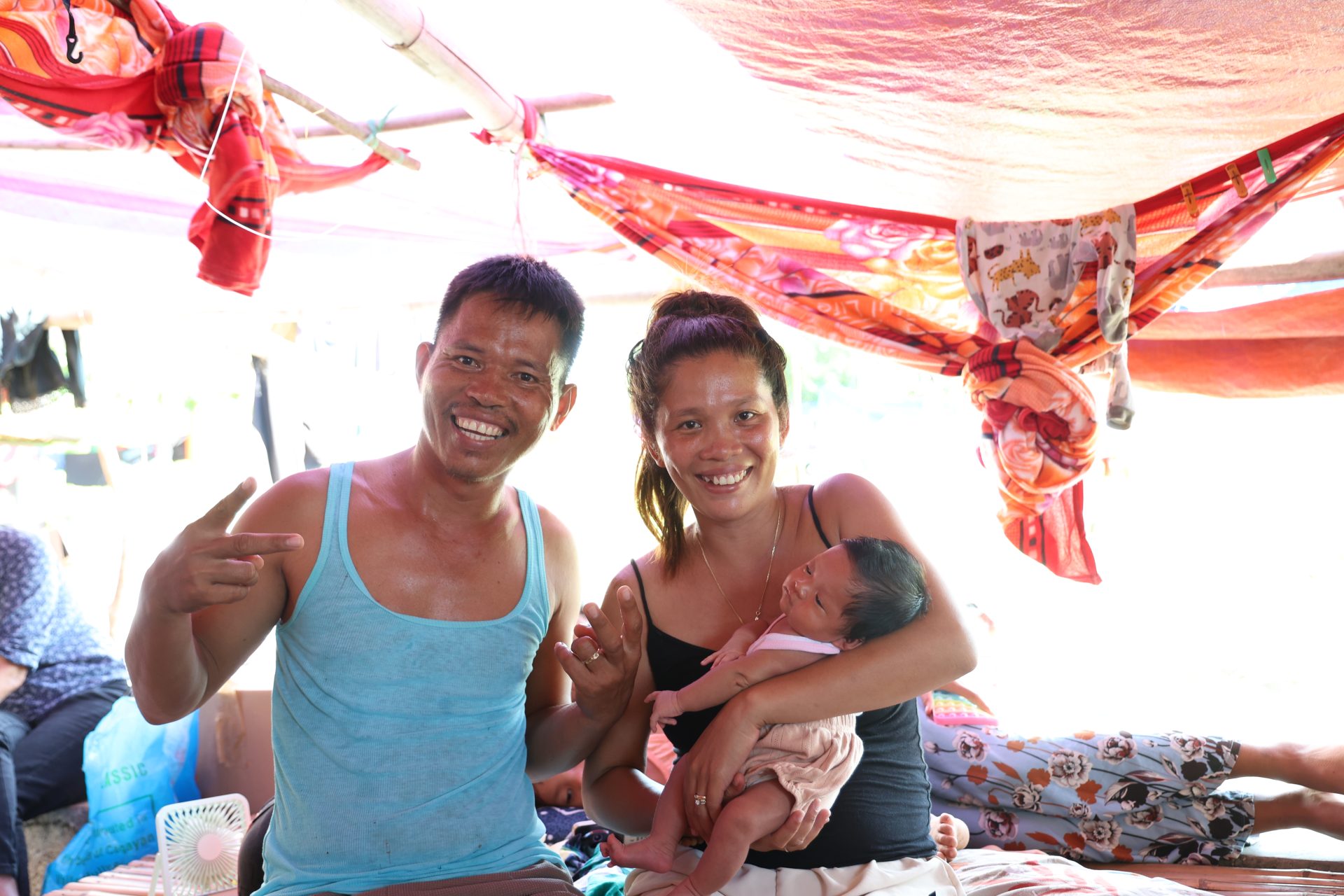
When the camera was pointed at them, residents responded with a smile, and children were running around playing basketball and volleyball. It was a rare sight in the disaster area, and staff said they were impressed by the resilience of the Filipino people.
At the same time, aftershocks are expected to continue through the end of the year. Residents will likely continue to live outside of their homes out of concern for safety. Many people are suffering from trauma, and behind their smiles, they live each day in fear of aftershocks that could strike at any time.
We hope that the support provided by Peace Winds will ease the fear of all the disaster survivors we met in the Philippines, even just a little, and become a beacon of light that protects their smiles.
Peace Winds’ activities in the Philippines are made possible by a grant from Japan Platform and by donations from our supporters.